
8 Days Private Istanbul Ankara Cappadocia Pamukkale Konya Bursa Tour
7 nights / 8 days
From €699
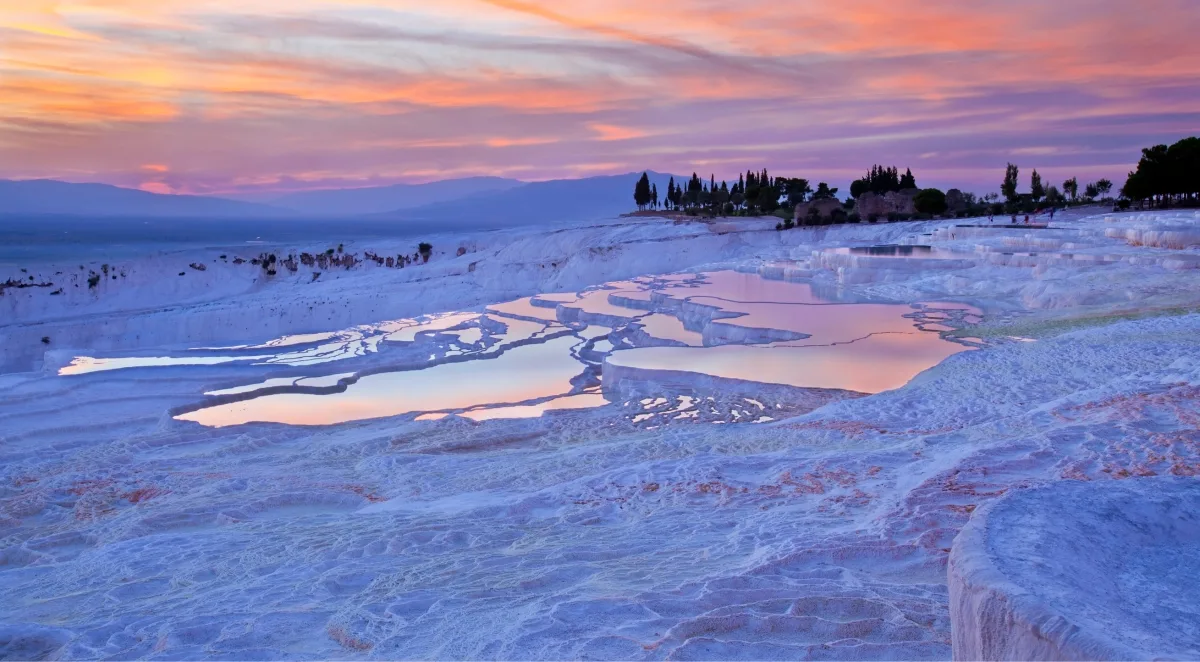
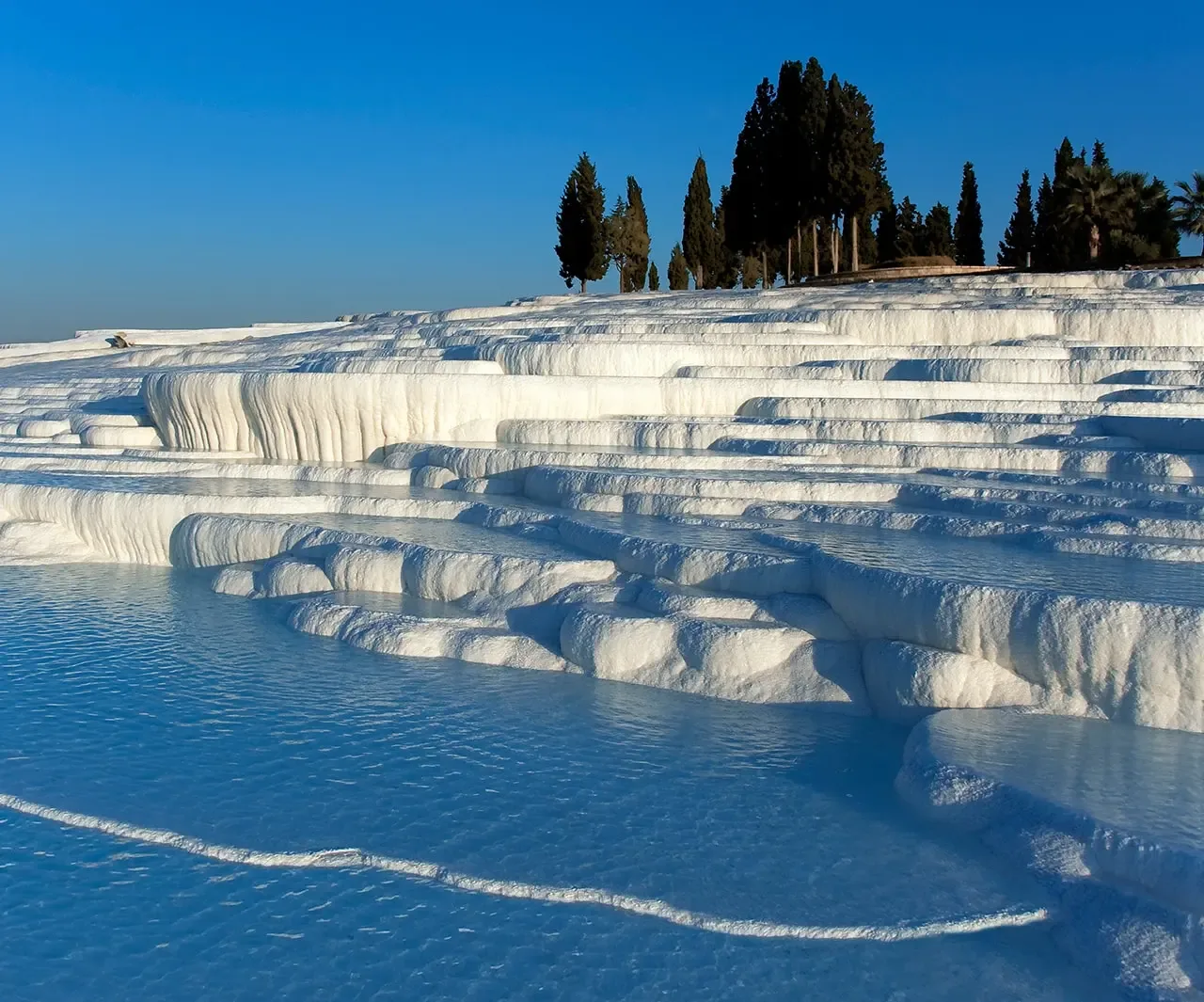
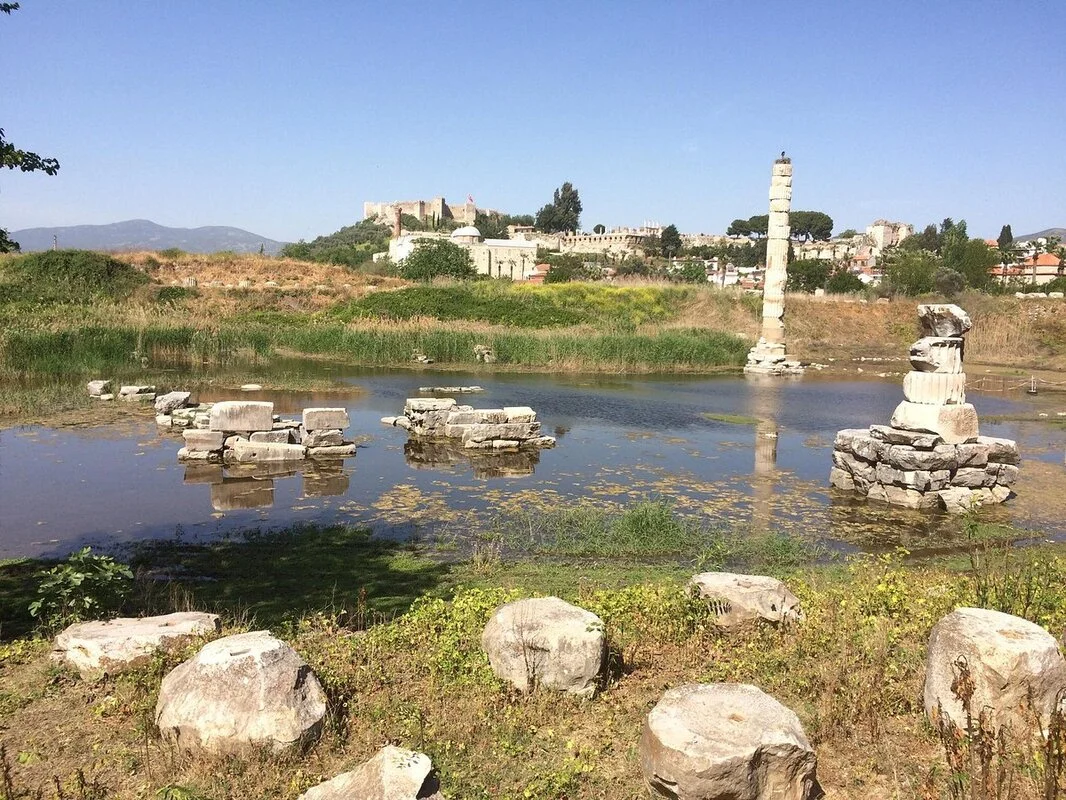
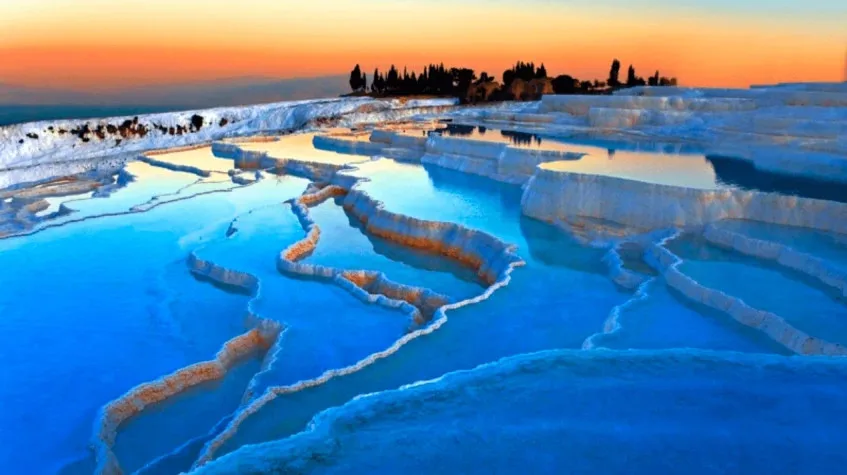
The dazzling white travertine terraces and the ancient spa city of Hierapolis.






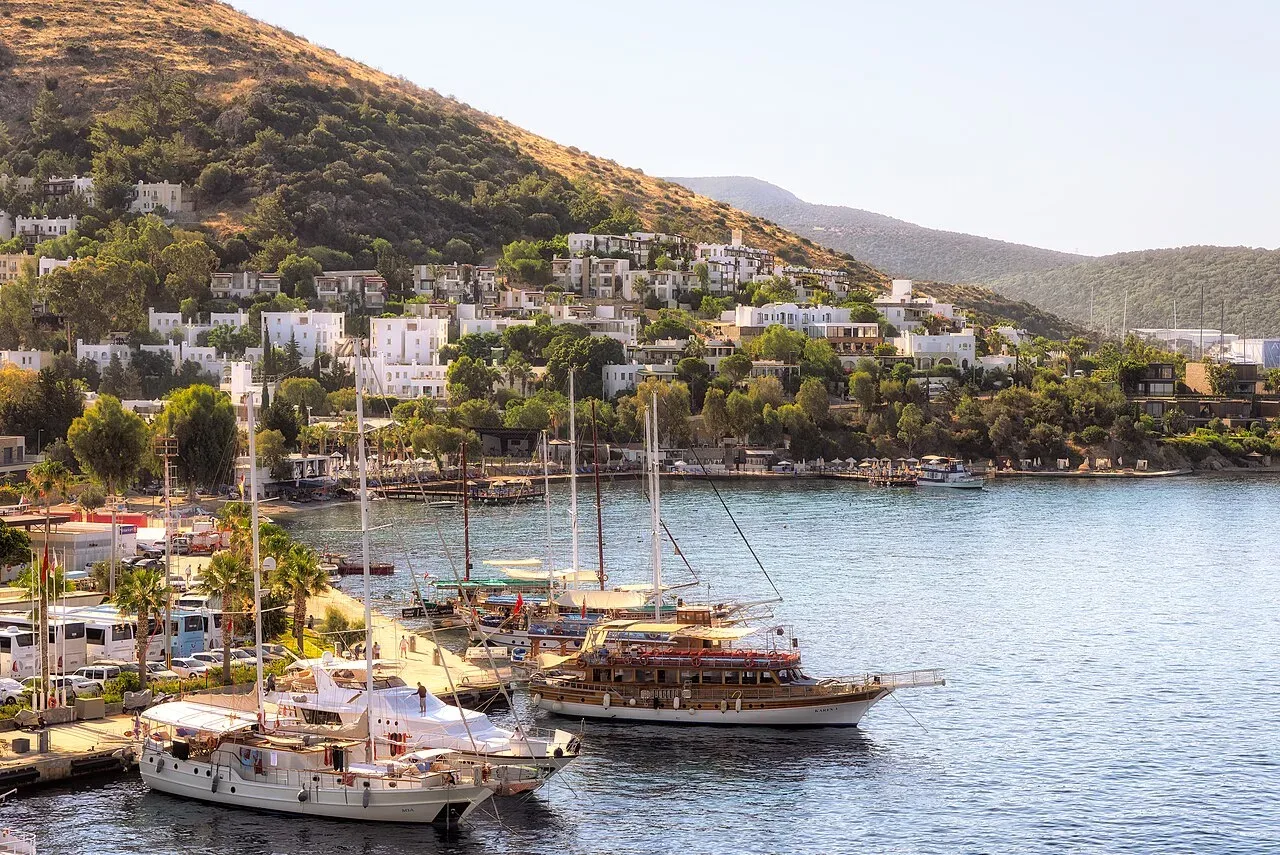

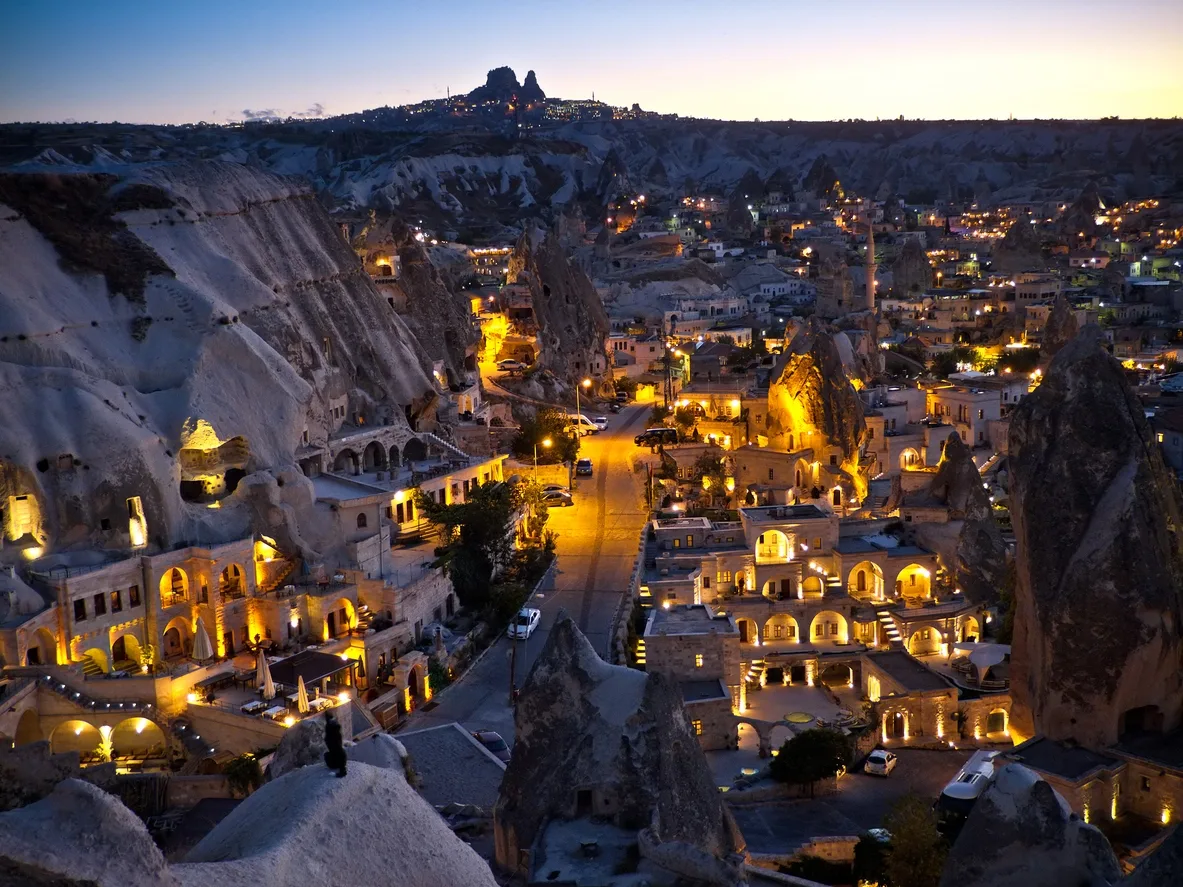


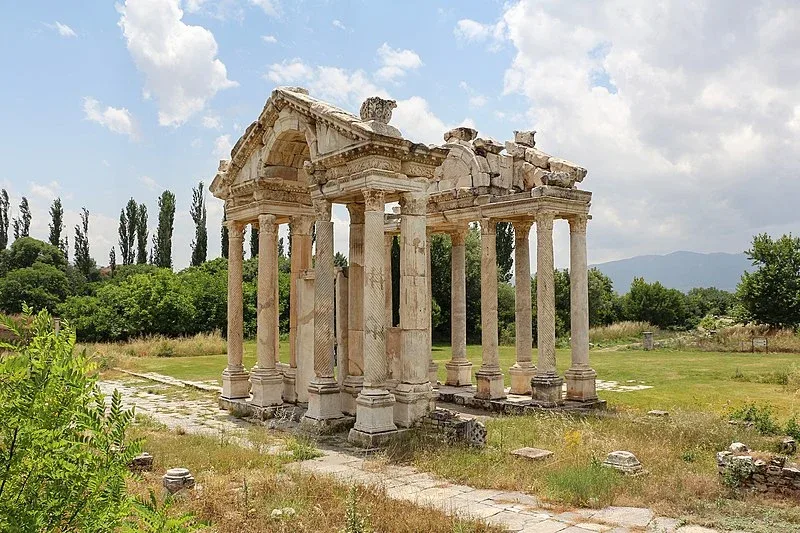
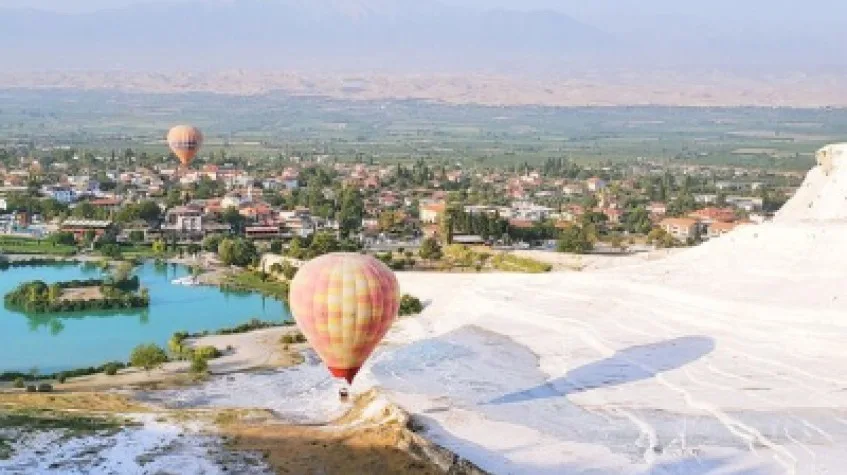



The dazzling white travertine terraces and the ancient spa city of Hierapolis.
As a TURSAB-licensed in-house DMC operating across Turkey since 2007, Inca Tour arranges private guided tours, daily excursions, airport transfers and hand-picked hotels in Denizli — every detail planned and operated by our own team.
One full day is enough for most visitors to see the travertine terraces and the ancient city of Hierapolis, while two days allow a slower pace, a second visit to the terraces at a quieter hour, and time in the surrounding villages.
Many travelers arrive in the morning, walk the white calcium terraces, explore the Hierapolis ruins and museum, and continue onward the same evening. If you enjoy photography, the light changes considerably across the day, so an overnight stay lets you experience the site both in the afternoon and early the next morning. Pamukkale also fits naturally into longer itineraries through western Turkey, and Inca Tour includes it in several multi-day routes combining Istanbul, Ephesus, Cappadocia, and the Aegean coast.
Spring and autumn are generally the most comfortable seasons, with mild temperatures that make walking the travertines and the open ruins of Hierapolis pleasant, while summer brings strong heat and winter can be cold with occasional snow.
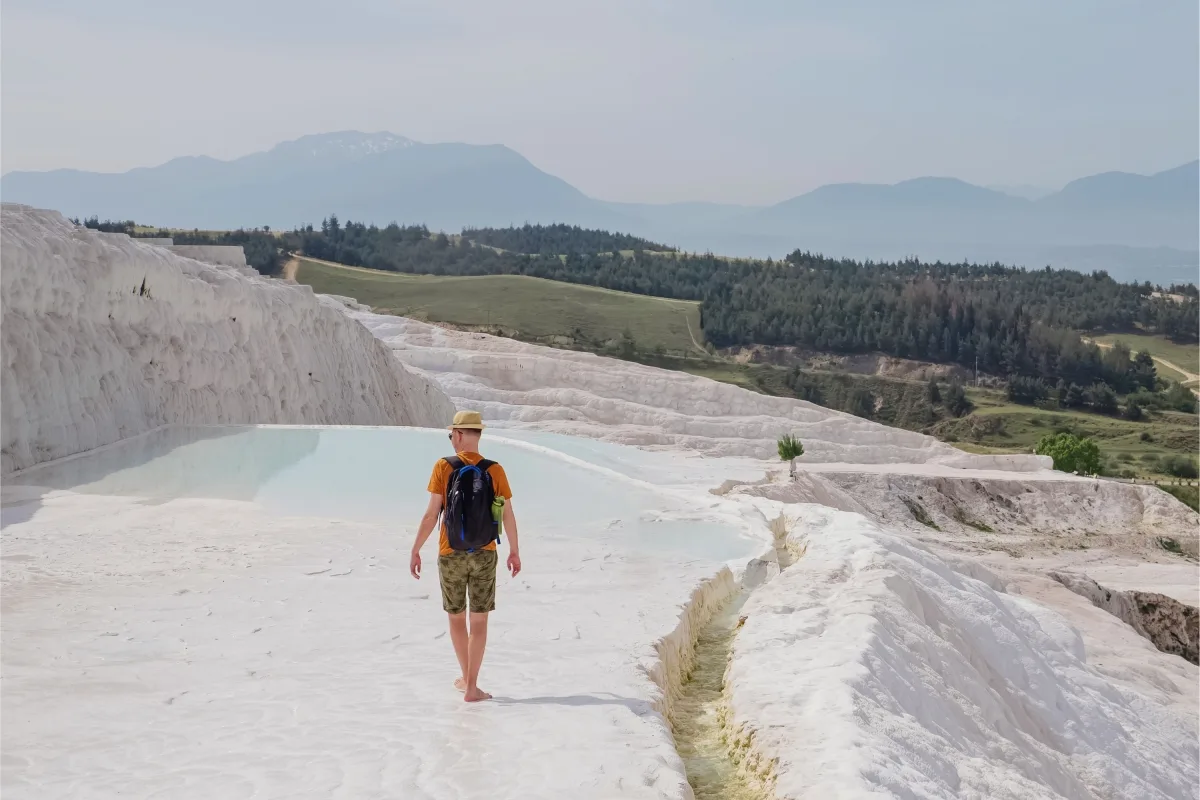
From April to June and again from September to October, days are warm without being overwhelming, and the site tends to feel less crowded than in peak summer. July and August are hot, so visitors then should plan the terraces for early morning or late afternoon. Winter visits are possible and the terraces can look striking against a frosty landscape, but the water on the travertines feels cold underfoot since you walk barefoot on them.
The nearest airport is Denizli Cardak Airport, about an hour's drive away, while Izmir and Antalya airports are roughly three hours by road and Dalaman Airport slightly more; from Denizli, minibuses and transfers cover the final short stretch to Pamukkale village.
Domestic flights connect Denizli with Istanbul, making a fly-and-transfer combination the quickest option from most parts of Turkey. Long-distance buses run to Denizli from Istanbul, Izmir, Antalya, and other major cities, and from the Denizli bus station local minibuses depart regularly for Pamukkale. Travelers who prefer a seamless journey can arrange private transfers, which is especially convenient when arriving at the airport or continuing on to coastal destinations such as Antalya, Bodrum, or Fethiye.
The main sights are the white travertine terraces themselves, the ancient Greco-Roman city of Hierapolis above them, the well-preserved Roman theater, the necropolis, the Antique Pool, and the Hierapolis Archaeology Museum.
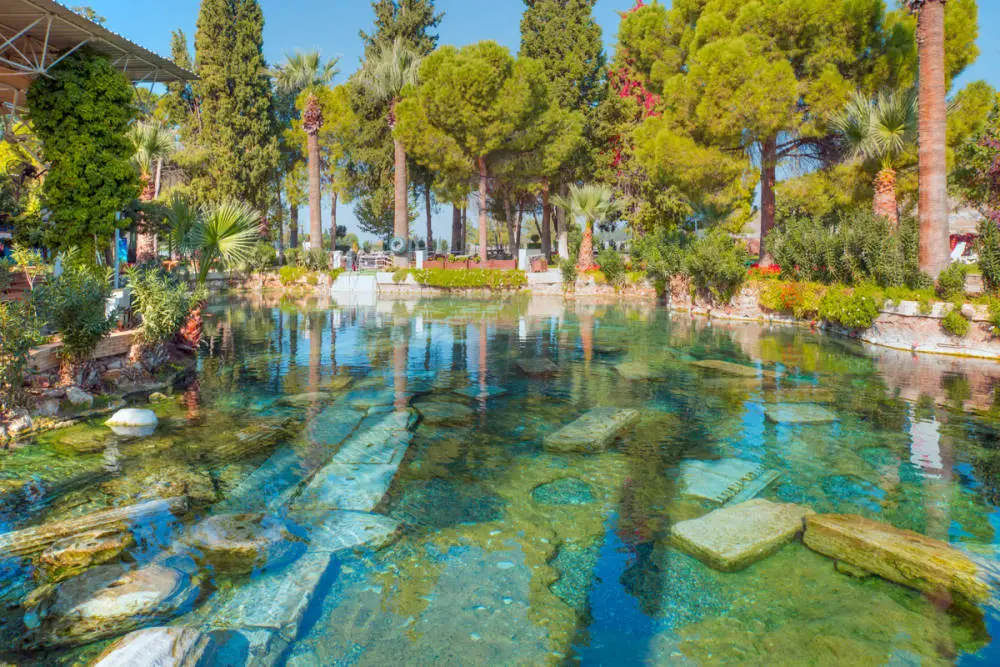
The travertines are formed by mineral-rich thermal water flowing down the hillside, leaving bright white calcium deposits in shallow pools; visitors walk a designated section barefoot to protect the formations. At the top of the hill, Hierapolis spreads across a wide plateau with a grand theater overlooking the valley, one of the largest ancient cemeteries in Anatolia, colonnaded streets, and bath complexes. The Antique Pool, sometimes called Cleopatra's Pool, lets you swim among submerged ancient columns in warm thermal water. The small museum in the former Roman bath displays sculptures and sarcophagi found at the site.
Most accommodation is in Pamukkale village at the foot of the terraces or in the neighboring town of Karahayit, known for its thermal hotels, while Denizli city offers a wider range of standard city hotels about twenty minutes away.
Staying in Pamukkale village puts you within walking distance of the travertine entrance, which is ideal for early morning visits before day-trippers arrive. Karahayit, a few kilometers north, has larger hotels, many with thermal pools and spa facilities fed by the region's hot springs. Options range from simple family-run pensions to comfortable mid-range hotels. Inca Tour can arrange hotel bookings as part of a private itinerary, matched to your route and travel style.
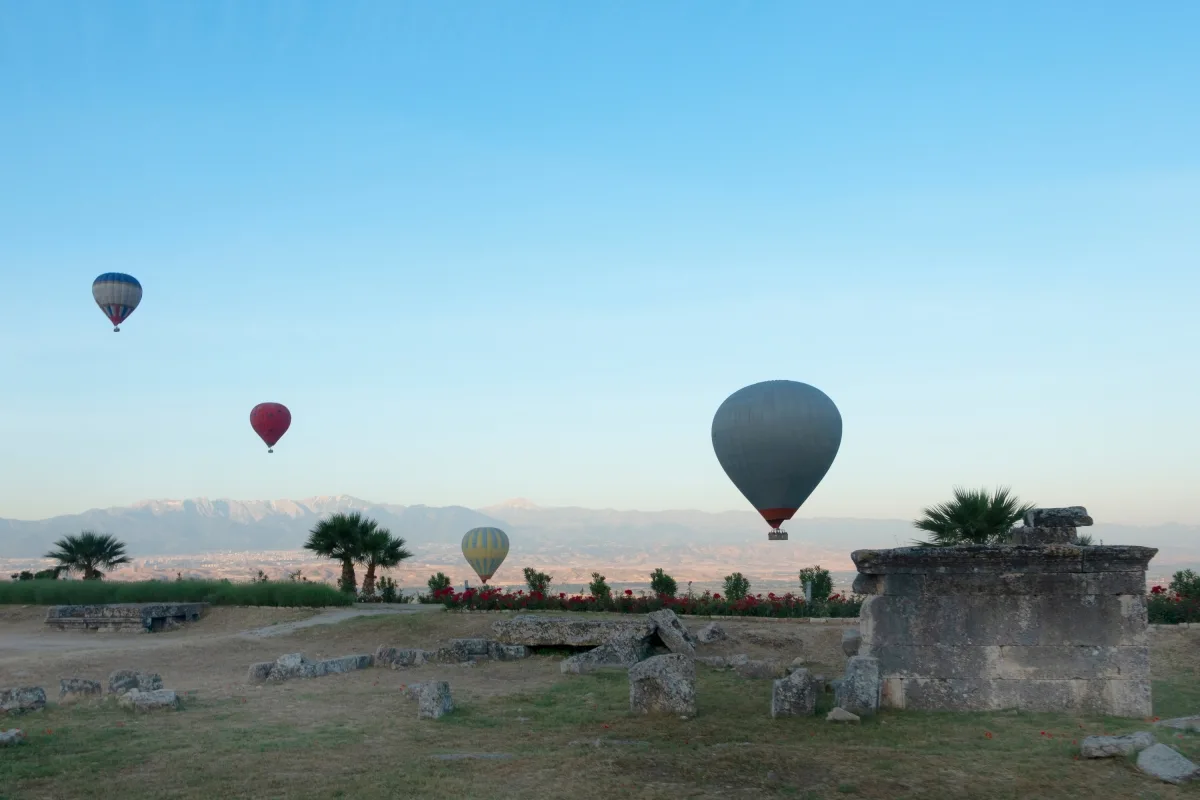
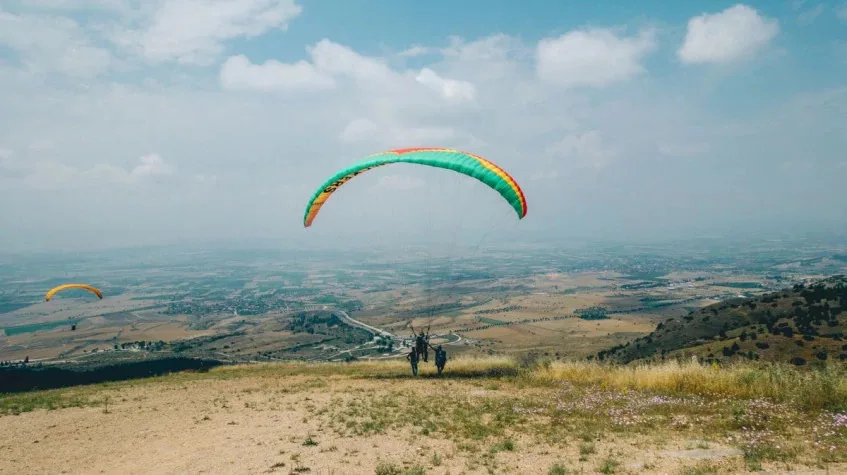
Popular options include guided visits to the travertines and Hierapolis, day tours from coastal resorts such as Antalya and Bodrum, hot air balloon rides over the terraces, and multi-day circuits linking Pamukkale with Ephesus, Cappadocia, and the Aegean coast.
Inca Tour operates a daily Pamukkale tour from Bodrum covering the travertines and Hierapolis, a Pamukkale and Hierapolis tour departing from Antalya, and a balloon ride from Bodrum for aerial views of the white terraces at sunrise. For longer journeys, our multi-day programs combine Pamukkale with destinations across Turkey, including seven to fourteen day itineraries through Istanbul, Gallipoli, Troy, Ephesus, Konya, Cappadocia, and the Mediterranean coast. Private tours with licensed guides and transfers can also be tailored to your schedule, whether Pamukkale is a single stop or part of a wider journey.
Last reviewed: October 2026