Troy, Canakkale
📍 Tevfikiye, Canakkale, Turkey · Truva
Troy, located in the Çanakkale region of Turkey, is an ancient archaeological site famous for its association with the Trojan War. Travellers visit to explore nine distinct settlement layers spanning four millennia, witnessing the physical remains of legendary history and significant Bronze Age architecture.


History of Troy
Troy, also known as Ilion, was a fortified city in northwest Anatolia that experienced continuous settlement for approximately four thousand years. Archaeologists have identified nine distinct layers, labelled Troy I through Troy IX, each representing a city built upon the ruins of its predecessor. The site was first settled around 3600 BC, growing into a significant fortified centre by around 3000 BC. During the Late Bronze Age, the city was known as Wilusa in Hittite records and served as a vassal state to the Hittite Empire, highlighting its strategic importance in regional politics.
The most famous period, often associated with the legendary Trojan War, corresponds to the Late Bronze Age layers. While the Iliad describes a rich kingdom with massive walls, archaeological evidence suggests that Troy VI and VIIa were substantial fortified settlements. However, there is no definitive proof of a specific Greek military attack matching the epic narrative. The city’s wealth and imposing architecture in earlier layers, particularly Troy II, initially led excavators to believe this was the Homeric city, though later research places the war era in subsequent periods.
Following the Bronze Age collapse, the site was reoccupied by Greek settlers who established Troy VIII and IX. These later cities became important religious and tourist centres in the classical world, revered for their mythological connections. Alexander the Great visited the site in 334 BC, offering sacrifices at the tombs of Achilles and Patroclus, thereby reinforcing the cultural significance of the location. The Roman city of Ilium continued to thrive, maintaining temples and public buildings that attracted pilgrims and scholars alike.
Modern excavation began in the 19th century, driven by the desire to locate the historical Troy. Frank Calvert, a local landowner, identified the mound of Hisarlık as the likely site, convincing Heinrich Schliemann to commence large-scale digs in 1871. Schliemann’s aggressive trenching revealed the stratified layers, though his methods caused significant damage. Subsequent scientific excavations by Wilhelm Dörpfeld and later teams refined the chronology, separating myth from reality and establishing the complex history of this UNESCO World Heritage site.
Things to Do in Troy
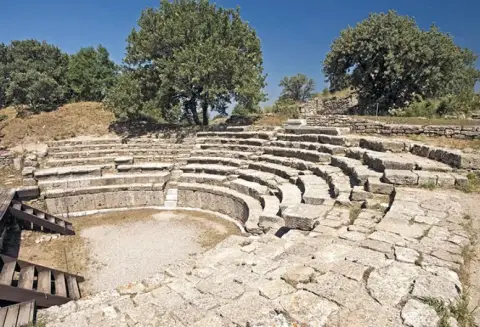
The primary attraction is the archaeological site of Hisarlık, where visitors can walk among the exposed ruins of the ancient city. Key features include the massive sloping walls of the Bronze Age citadel, the Roman Odeon, and the Temple of Athena. The site is open to the public, allowing for a close-up view of the stratified layers that reveal the city's long occupation. Guides often point out the specific areas excavated by Schliemann, providing context for the discovery of the famous, albeit controversial, treasure finds.
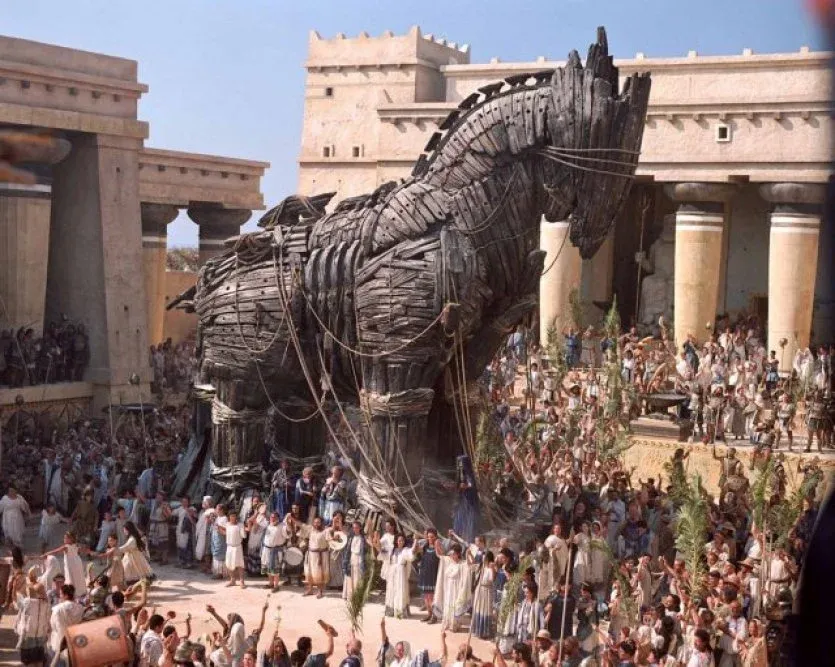
Near the entrance to the ruins stands a large wooden replica of the Trojan Horse (the horse used in the 2004 film Troy is displayed separately on the seafront in Çanakkale). This structure serves as a popular photo opportunity and helps visitors visualise the legendary narrative associated with the site. While not an ancient artefact, it bridges the gap between the mythological stories and the physical location, offering a tangible connection to the tales of the Iliad and the Aeneid for those interested in the literary heritage of the region.
For a deeper understanding of the artefacts and history, visitors should explore the nearby Troy Museum. This modern facility houses many of the objects recovered from the site, including pottery, jewellery, and architectural fragments. The museum provides a chronological narrative that complements the outdoor ruins, explaining the transition from the Bronze Age to the Greek and Roman periods. It offers a comprehensive overview of the daily life, trade, and religious practices of the city's inhabitants over millennia.
Beyond the immediate site, the surrounding landscape of the Troad offers scenic drives and historical context. The nearby village of Tevfikiye provides a glimpse into local rural life, while the broader Çanakkale region is rich with other historical sites. Visitors can combine a trip to Troy with visits to Gallipoli or the ancient city of Assos, creating a broader itinerary that explores the diverse historical layers of the Dardanelles region.
Top Sights in Troy
Hisarlık Mound
The central archaeological site containing nine layers of ancient settlement, showcasing the city's continuous habitation from the Neolithic to the Roman period.
Trojan Horse Replica
A large wooden horse at the site entrance, serving as an iconic landmark and photo opportunity for visitors.
Troy Museum
A modern museum displaying artefacts recovered from the site, providing detailed context on the city's history and daily life.
Schliemann's Trench
A deep excavation cut made by Heinrich Schliemann, revealing the stratified layers of the ancient city.
Roman Odeon
Remains of a classical theatre structure from the later Greek and Roman periods, indicating the site's continued cultural importance.
Travel Tips for Troy
Getting there: Troy is located approximately 30 kilometres south of Çanakkale city centre. The most convenient way to reach the site is by car, taxi, or organised tour from Çanakkale. Public transport options are limited, so checking local bus schedules in advance is advisable if you are not using a private vehicle or tour operator.
Best time to visit: Spring and autumn offer the most comfortable weather for exploring the outdoor ruins, with mild temperatures and fewer crowds. Summers can be quite hot and exposed, as there is limited shade across the archaeological site. Visiting early in the morning or later in the afternoon helps avoid the peak heat and provides better lighting for photography.
What to wear / bring: Wear sturdy, comfortable footwear suitable for walking on uneven stone surfaces and dirt paths. A hat, sunglasses, and sunscreen are essential due to the lack of shade at the ruins. Bring sufficient water, especially during warmer months, and consider a light jacket for cooler evenings if you plan to stay in the area after sunset.
Visiting the site: current opening days and visitor information are on our museum page: Troy Museum, The Archaeological Site of Troy.
Day Tours that Visit Troy
Guided daily excursions in Canakkale that include Troy.


Hotels in Troy
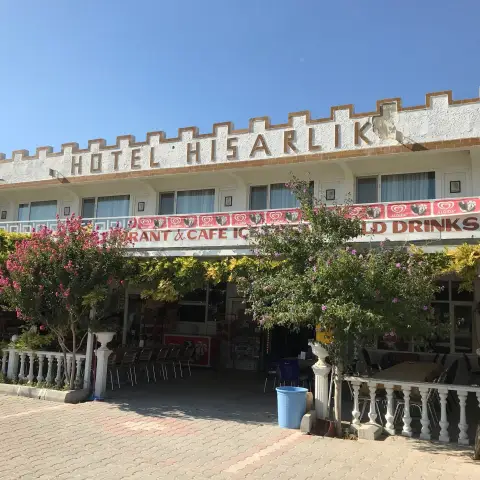
Hotels within walking distance of Troy — request your room online, we reply within 24 hours.
Airport Transfers to Troy
Private door-to-door transfers to Canakkale (Troy) — price per vehicle, one way, meet & greet included.
✈️ Istanbul Airport (IST) → Canakkale (Troy)
Book this transfer →| Vehicle | Passengers | Price (one way) |
|---|---|---|
| Mercedes Vito | up to 5 | €403 |
✈️ Sabiha Gokcen Airport (SAW) → Canakkale (Troy)
Book this transfer →| Vehicle | Passengers | Price (one way) |
|---|---|---|
| Mercedes Vito | up to 5 | €505 |
Troy – Frequently Asked Questions
Is the Trojan War historically proven?
There is no definitive archaeological evidence for a specific Greek attack matching the Iliad. However, the site shows signs of destruction and conflict in the Late Bronze Age, suggesting a kernel of truth behind the legends.
What is the difference between Troy and Ilion?
They refer to the same city. 'Troy' is the Latin and English name, while 'Ilion' or 'Ilios' was the Greek name used in classical literature and by the inhabitants themselves.
How long does it take to visit the site?
Most visitors spend between two to three hours exploring the ruins and the nearby museum. This allows time to read information boards and appreciate the scale of the excavation.
Is the site accessible for people with mobility issues?
The terrain is uneven and includes steep slopes and stone steps, which can be challenging. Some areas may be difficult to navigate for those with significant mobility restrictions.
Why is Troy a UNESCO World Heritage site?
It was inscribed in 1998 for its outstanding universal value as a symbol of the encounter between different cultures and its profound influence on literature and art.