Assos (Behramkale), Canakkale
📍 Ayvacık, Canakkale, Turkey
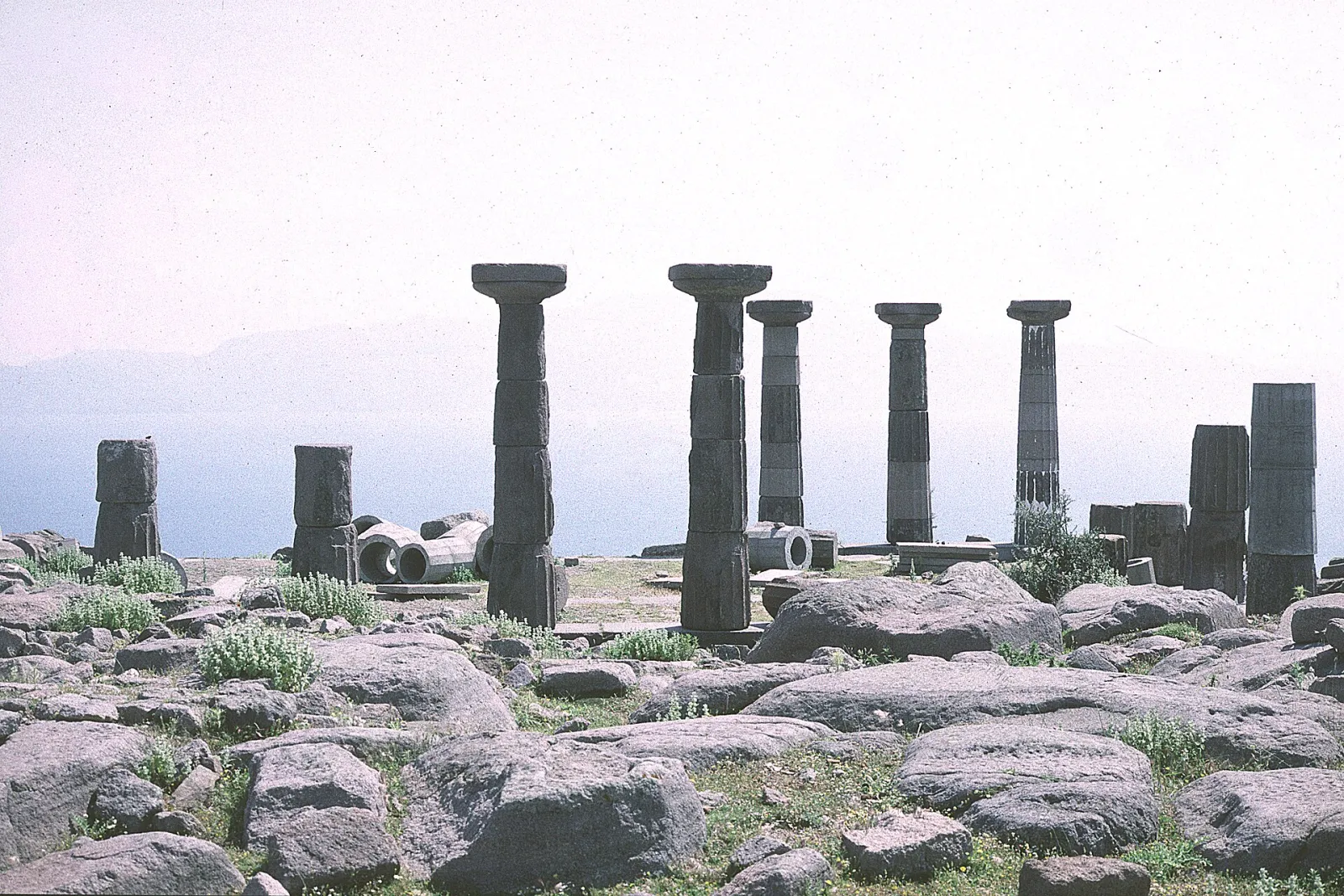
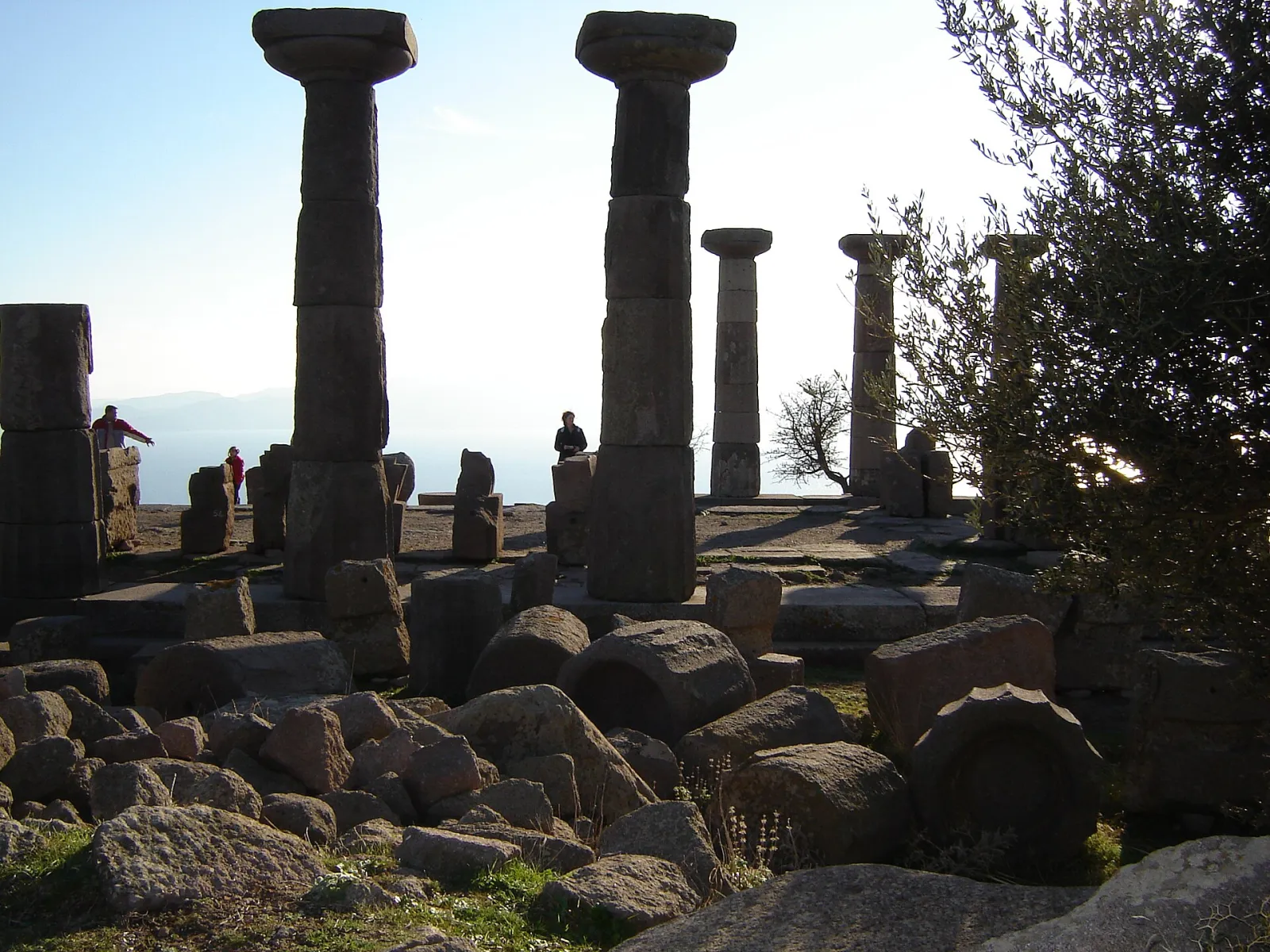
Assos, known locally as Behramkale, is an ancient Aeolian city perched on a volcanic crag above the Aegean Sea. Travellers visit to explore its rare archaic Doric Temple of Athena, walk well-preserved Hellenistic walls, and enjoy panoramic views of Lesbos from the historic acropolis. Assos (Behramkale) is on UNESCO's World Heritage Tentative List (since 2017) as “Archaeological Site of Assos”.

Photos via Wikimedia Commons: horsch (CC BY-SA 3.0) · Elelicht (CC BY-SA 3.0) · Carl Campbell from Santiago de Querétaro... (CC BY 2.0) · Hermann Luyken (CC BY-SA 3.0) · Dosseman (CC BY-SA 4.0) · Horacio36 (CC BY-SA 3.0)
History of Assos (Behramkale)
Founded by Aeolian colonists from Lesbos between 1000 and 900 BC, Assos rose to prominence under Hermias of Atarneus in the 4th century BC. He invited philosophers to the city, including Aristotle, who established an academy here in 348 BC. This period marked the city's golden age, characterized by intellectual prosperity and the construction of the Doric Temple of Athena in 530 BC.
The Persian conquest ended Hermias' rule, leading to Aristotle's departure for Macedonia. Alexander the Great later liberated the region in 334 BC. During this era, Assos became the birthplace of Cleanthes, a prominent Stoic philosopher. The city subsequently fell under the control of the Kings of Pergamon before being absorbed into the Roman Empire in 133 BC, maintaining its significance as a key harbour in the Troad.
Christian tradition records that St. Paul and Luke the Evangelist visited Assos during the first century AD, as noted in the Acts of the Apostles. In Byzantine times, the settlement was renamed Makhramion, derived from a local officer, which eventually evolved into the modern name Behramkale. The city remained inhabited through the Middle Ages, evidenced by the 14th-century Hüdavendigar Mosque and Bridge.
Modern archaeological efforts continue to uncover significant finds, including a Hellenistic family grave and ancient sculptures. The site was inscribed on the UNESCO Tentative List of World Heritage Sites in 2017. Today, the ruins of the acropolis, theatre, and gymnasium stand alongside the traditional stone houses of Behramkale, offering a tangible connection to its layered past.
Things to Do in Assos (Behramkale)
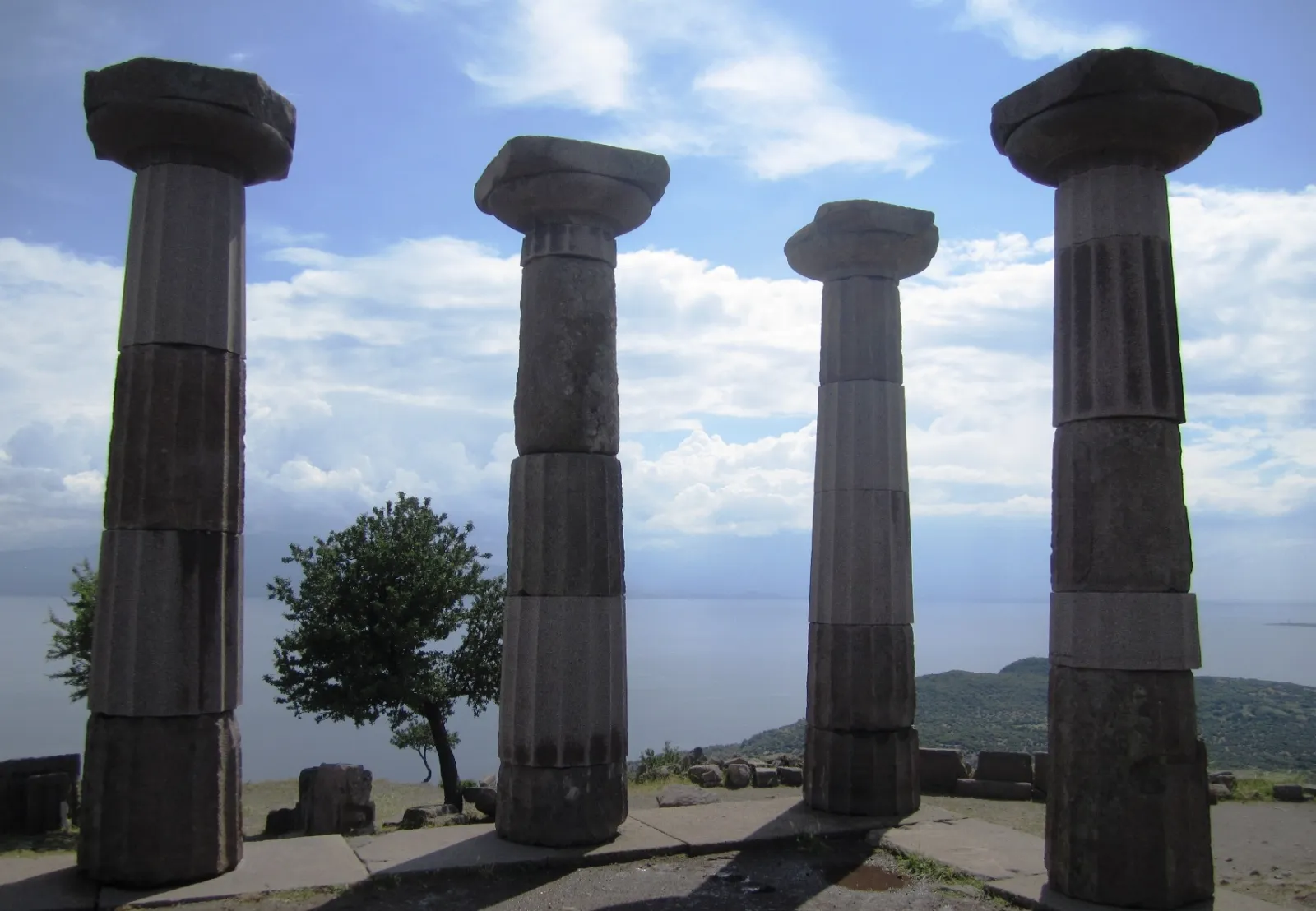
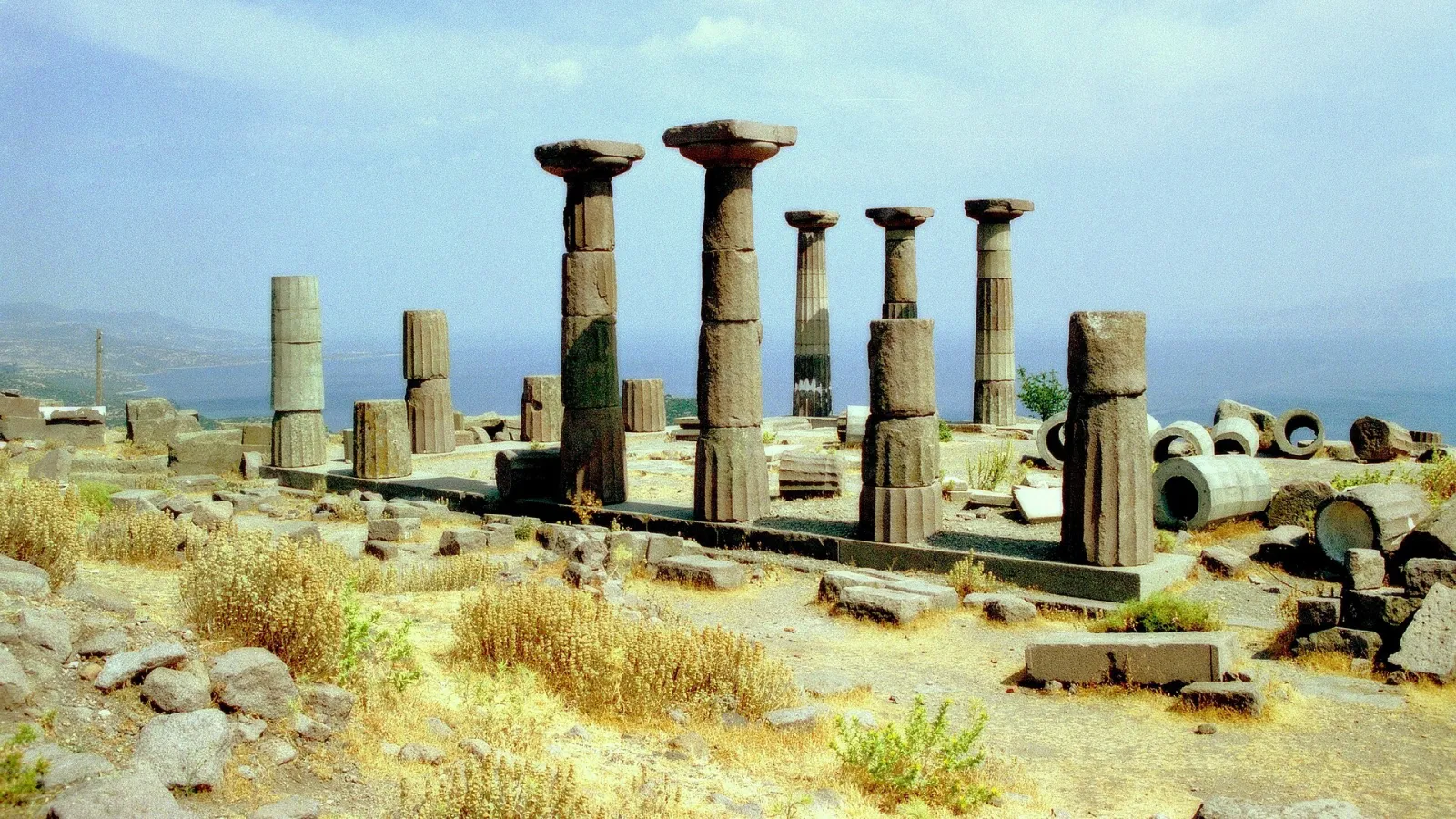
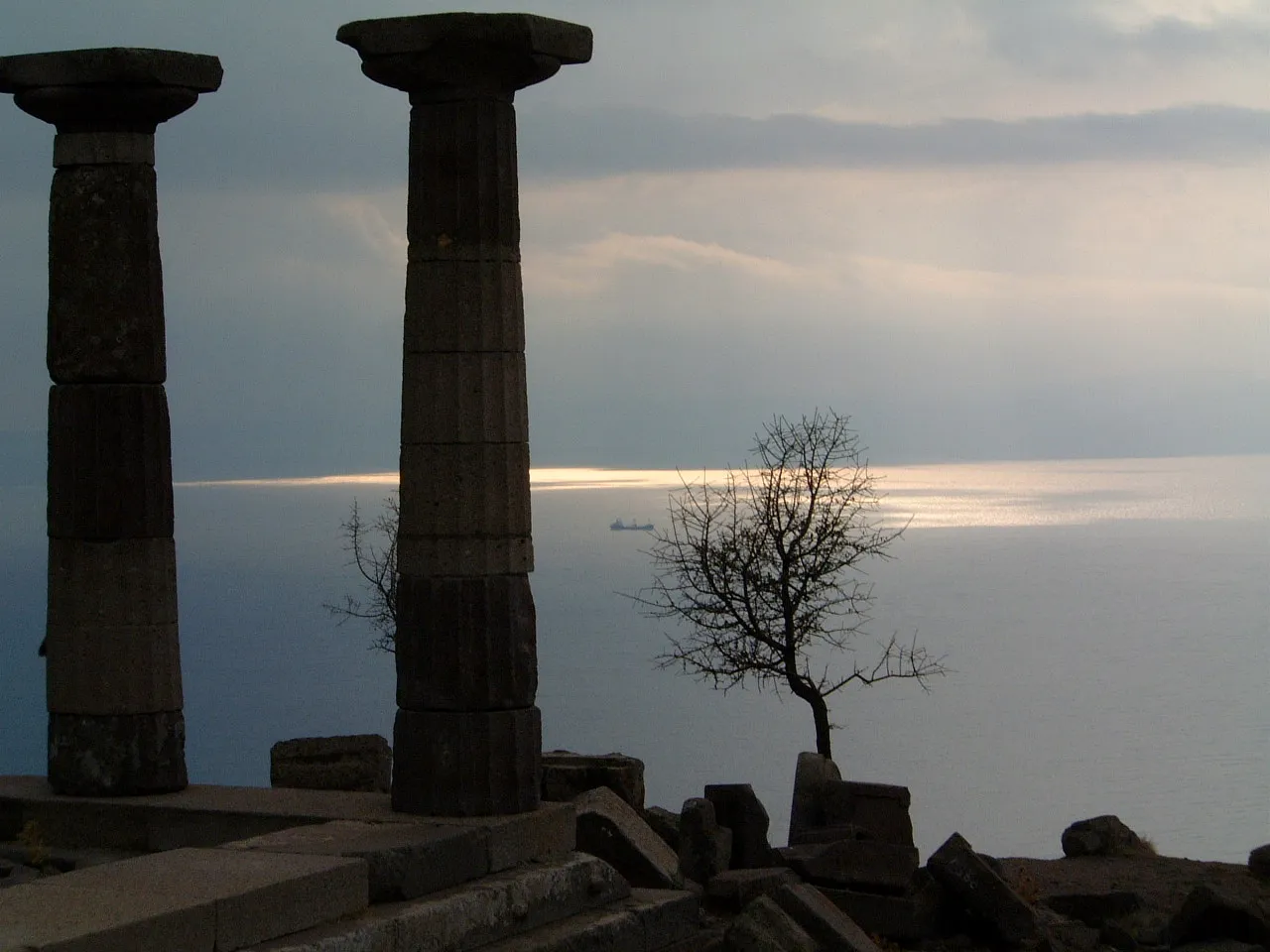
The primary attraction is the Acropolis, where visitors can explore the ruins of the Temple of Athena. Although only a handful of its columns have been re-erected, the site offers breathtaking views of the Adramyttian Gulf and the island of Lesbos. The surrounding area includes the remains of the agora, a bouleuterion, and a gymnasium, all accessible via ancient paved roads.
Walk along the 4th-century BC city walls, which feature impressive 14-meter-high towers and a well-preserved main gate. To the south, the hillside theatre, built for 5,000 spectators, provides another scenic viewpoint. Nearby, the necropolis contains numerous sarcophagi, some of which were historically noted by Pliny for their unique stone composition.
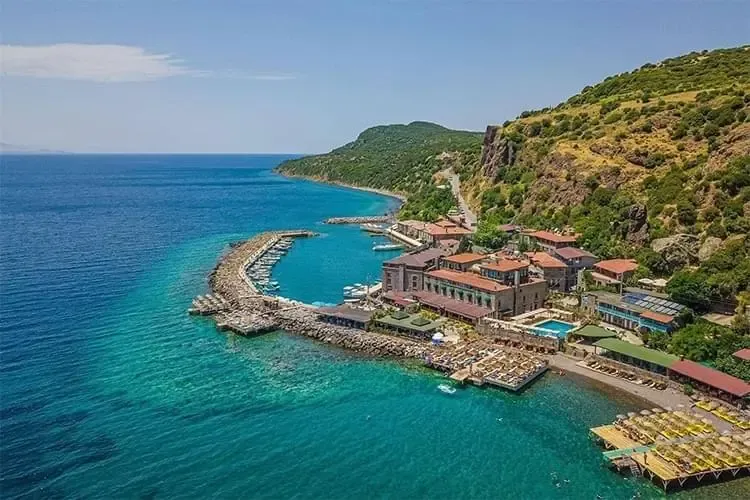
For a change of pace, descend the steep road to Lower Assos (İskele), the ancient harbour. This small pebbly beach area offers a relaxed atmosphere and access to the sea. The journey down provides a different perspective on the cliffside ruins, highlighting the strategic importance of the location for maritime trade in antiquity.
Top Sights in Assos (Behramkale)
Temple of Athena
A rare archaic Doric temple in Anatolia, built around 530 BC, with re-erected columns and sweeping views over the sea to Lesbos.
Hellenistic City Walls
Well-preserved 4th-century BC fortifications with 14-meter-high towers and a main gate.
Ancient Theatre
A 3rd-century BC theatre built into the hillside, originally seating 5,000 spectators.
Lower Assos Harbour
The ancient port area with a pebbly beach, accessible via a steep road from the upper town.
Hüdavendigar Mosque
A 14th-century Ottoman structure located near the acropolis ruins.
Travel Tips for Assos (Behramkale)
Getting there: Assos is located in the Ayvacık district of Çanakkale province. It is accessible by car from Çanakkale or via local minibuses from Ayvacık. The road to the upper town is narrow and winding, requiring careful driving.
Best time to visit: Spring and autumn offer the most comfortable weather for exploring the exposed ruins. Summers can be hot, so early morning visits are recommended to avoid the midday heat while hiking the acropolis.
What to wear / bring: Wear sturdy footwear as the terrain involves uneven ancient stones and steep paths. Bring water and sun protection, as shade is limited on the upper hill. A camera is essential for capturing the panoramic coastal views.
Visiting the site: current opening days and visitor information are on our museum page: Çanakkale Assos Archaeological Site.
Day Tours that Visit Assos (Behramkale)
Guided daily excursions in Canakkale that include Assos (Behramkale).

Hotels in Assos (Behramkale)
Hotels within walking distance of Assos (Behramkale) — request your room online, we reply within 24 hours.
Airport Transfers to Assos (Behramkale)
Private door-to-door transfers to Assos (Behramkale) — price per vehicle, one way, meet & greet included.
✈️ Istanbul Airport (IST) → Assos (Behramkale)
Book this transfer →| Vehicle | Passengers | Price (one way) |
|---|---|---|
| Mercedes Vito | up to 5 | €596 |
| Mercedes Sprinter | up to 14 | €766 |
✈️ Sabiha Gokcen Airport (SAW) → Assos (Behramkale)
Book this transfer →| Vehicle | Passengers | Price (one way) |
|---|---|---|
| Mercedes Vito | up to 5 | €656 |
| Mercedes Sprinter | up to 14 | €845 |
Assos (Behramkale) – Frequently Asked Questions
Is Assos the same as Behramkale?
Yes, Behramkale is the modern Turkish name for the village located at the site of ancient Assos. Most visitors and locals still refer to the archaeological site and the village by its ancient name.
Why is Assos historically significant?
Aristotle lived and taught here in the 4th century BC, and its Temple of Athena is a rare archaic Doric temple in Anatolia. It also appears in the New Testament as a stop for St. Paul.
Can you swim at Assos?
Yes, swimming is possible at Lower Assos, the harbour area at the base of the cliff. The beach is pebbly, and the water is generally clear and calm.
How long does it take to explore the ruins?
A thorough visit to the acropolis, walls, and theatre typically takes two to three hours. Adding time for the harbour and lunch may require a full day.
Is the site suitable for children?
The ruins are open-air and involve uneven terrain and steep drops, so constant supervision is required. The harbour area is more relaxed and suitable for families with young children.
Is Assos (Behramkale) a UNESCO World Heritage Site?
Not yet. Assos (Behramkale) is on UNESCO's World Heritage Tentative List (since 2017) as “Archaeological Site of Assos”. A Tentative List entry is a site Türkiye intends to nominate; it is not yet inscribed.