Odeon of Ephesus
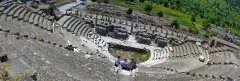
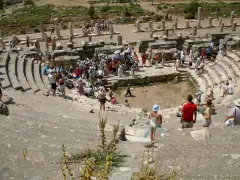
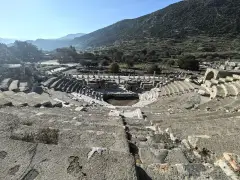
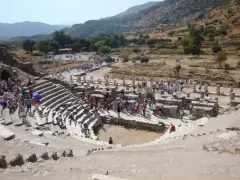
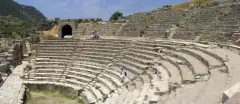
Photos: sailko, CC BY-SA 3.0 · Erik Cleves Kristensen, CC BY 2.0 · Mehveuuum, CC BY-SA 4.0 · patano, CC BY-SA 3.0 · CC BY-SA 3.0 · mayatomo, CC BY-SA 3.0 · Magdalena Siudy (Freta), CC BY-SA 3.0 — via Wikimedia Commons
Discover the Odeon of Ephesus, a historic council house in İzmir, Turkey, part of the UNESCO-listed ancient city ruins.
ℹ️ About Odeon of Ephesus
The Odeon of Ephesus is a significant ancient structure located within the archaeological site of Ephesus in Selçuk, İzmir Province, Turkey. This monumental building served as a council house and concert hall for the city's inhabitants. It stands as part of the extensive ruins that characterize this UNESCO World Heritage Site, offering visitors a glimpse into the civic and cultural life of ancient Ionia.
This site is part of “Ephesus”, inscribed on the UNESCO World Heritage List (2015).
As a key component of the Ephesus complex, the Odeon reflects the architectural grandeur of the Roman era. The site is easily accessible from Adnan Menderes Airport and the nearby resort town of Kuşadası. Exploring this archaeological site allows travelers to connect with the historical layers of a city that was once a major port and commercial center, now preserved as a favorite international tourist attraction.
History
Ephesus was founded as an Attic-Ionian colony in the 10th century BC. The city later came under the control of the Roman Republic in 129 BC, a period during which many monumental buildings were constructed or renovated. The Odeon, serving as a Bouleuterion, was part of the civic infrastructure that supported the administrative and social functions of the city during this prosperous era.
The city's history is marked by significant transitions, including its destruction by the Goths in 263 AD. Although it was rebuilt, Ephesus faced further challenges, such as partial destruction by an earthquake in 614 AD. The gradual silting of the harbour by the Küçükmenderes River led to a decline in its importance as a port, eventually causing the city to be abandoned and its ruins to remain largely untouched until modern excavations.
What to See
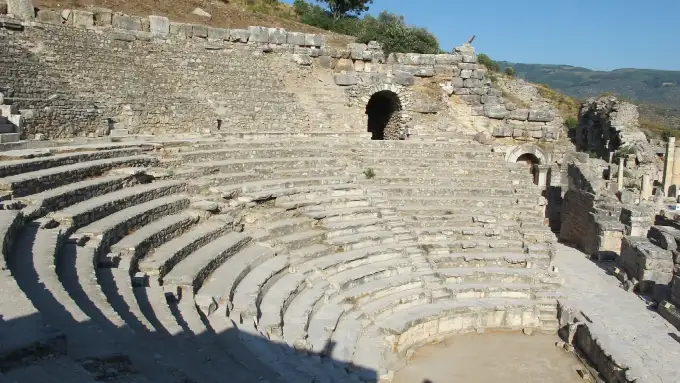
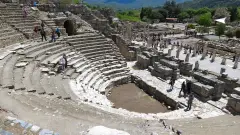
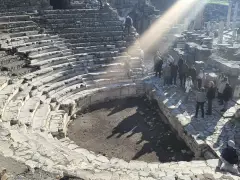
Visitors to the Odeon of Ephesus can observe the well-preserved remains of this ancient council house. The structure features a semi-circular seating area designed for gatherings and performances. Key elements include:
- The tiered seating arrangement typical of Roman civic buildings.
- The orchestra area, which served as the performance space.
- Architectural fragments that illustrate the construction techniques of the period.
The Odeon is situated near other major monuments, allowing for a comprehensive tour of the site's civic and religious centers.
Visiting Tips
Wear comfortable shoes as the site involves walking on uneven ancient stone surfaces. Sun protection, including hats and sunscreen, is recommended due to the open-air nature of the ruins.
Combine your visit to the Odeon with nearby sights such as the Library of Celsus and the Theatre. Dress modestly if visiting nearby religious sites, and carry water to stay hydrated during your exploration.
Hotels near Odeon of Ephesus
- Ephesus Princess ★★★★★ 6.6 km
- Tusan Beach Resort ★★★★★ 7.3 km
- Tusan Beach Resort ★★★★★ 7.4 km
- Pine Bay Holiday Resort ★★★★★ 7.5 km
- Charisma De Luxe Hotel ★★★★★ 9.8 km
- DoubleTree by Hilton Hotel Kusadasi ★★★★★ 10.2 km
More Museums in İzmir


Odeon of Ephesus – Frequently Asked Questions
What is Odeon of Ephesus?
The Odeon of Ephesus is a significant ancient structure located within the archaeological site of Ephesus in Selçuk, İzmir Province, Turkey.
Where is Odeon of Ephesus located?
Odeon of Ephesus is in Selçuk, İzmir, Turkey.
Do children need a ticket at Odeon of Ephesus?
Children aged 0–6 enter Odeon of Ephesus free of charge. Visitors aged 7 and over need a full ticket.
What other museums can I visit in İzmir?
Other museums in İzmir include Ahmet Pristina City Archive & Museum, Ege University Ethnography Museum and Ege University Paper and Book Arts Museum.