Zal Mahmud Pasha Mosque
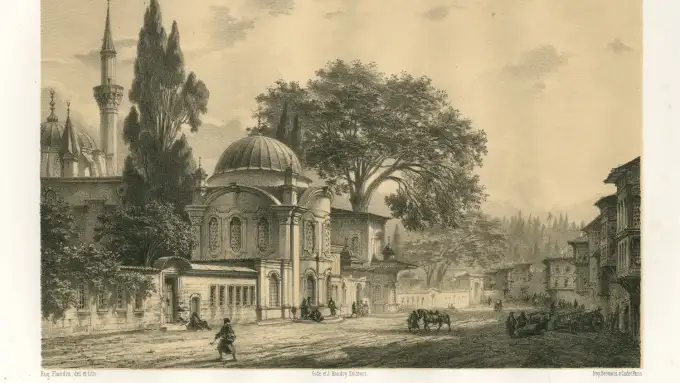
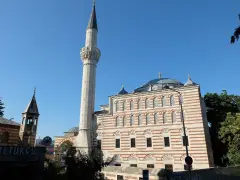
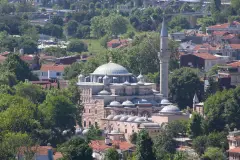
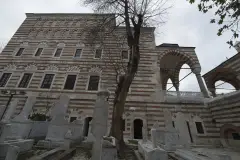
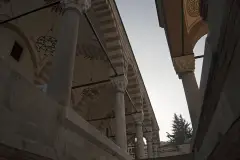
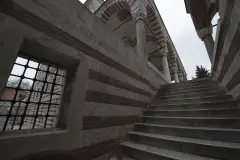
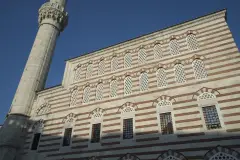
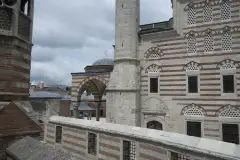
Photos: Eugène Flandin, Public domain · R Prazeres, CC BY-SA 4.0 · Ali Osman Dilekoğlu, CC BY-SA 4.0 · Dosseman, CC BY-SA 4.0 — via Wikimedia Commons
Explore the Zal Mahmud Pasha Mosque in Istanbul's Eyüp district, a 16th-century Ottoman complex designed by Mimar Sinan and completed in 1590.
ℹ️ About Zal Mahmud Pasha Mosque
The Zal Mahmud Pasha Mosque is a historic Ottoman complex located in the Eyüp district of Istanbul, Türkiye. Designed by the renowned imperial architect Mimar Sinan, this 16th-century structure stands as a significant example of classical Ottoman architecture. The site functions as a külliye, encompassing a mosque, madrasa, tomb, and fountain, reflecting the comprehensive social and religious infrastructure typical of the period.
Visitors to the area can explore this architectural ensemble, which was jointly endowed by Şah Sultan and her husband, the vizier Zal Mahmud Pasha. Although construction began in 1577, the complex was completed in 1590, shortly after Sinan's death. It remains a notable landmark for those interested in the history and design of Ottoman religious buildings in Istanbul.
History
The construction of the complex was initiated in 1577 through a joint endowment by Şah Sultan and her second husband, Zal Mahmud Pasha. Şah Sultan was the daughter of Sultan Selim II and Nurbanu Sultan. After the death of her first husband in 1574, she married Zal Mahmud Pasha, a Bosnian-born vizier who had served under Suleiman I. Historical records indicate that the initial plan for the külliye included a madrasa, tomb, and fountain, with the mosque added to the program following the couple's marriage.
Both patrons died in 1580, before the project's completion. The imperial architect Mimar Sinan designed the structure, but the building work was not finished until 1590, two years after Sinan's own death. The complex includes a tomb where Zal Mahmud Pasha is buried, located on a lower platform near the madrasa. The fountain, built of cut stone, bears an inscription dating to 1590, marking the completion of the endowment.
What to See
The complex features a central mosque surrounded by a courtyard with a sixteen-domed portico and a central ablution fountain supported by eight columns. The mosque's exterior displays a distinctive red and white appearance due to its mixed stone and brick walls. Inside, the mihrab is framed by high-quality Iznik tiles from the period, showcasing superior design and technical craftsmanship. The minbar is noted for its careful stone workmanship.
- The tomb of Zal Mahmud Pasha, an octagonal structure with a single dome and a six-columned portico.
- The madrasa, which surrounds a courtyard and includes a second section on a lower platform.
- A stone fountain located near the entrance, featuring a rectangular frame and historical inscriptions.
- Two rows of closely spaced windows on the side walls, a stylistic feature unique among Sinan's works.
Visiting Tips
Visitors should wear comfortable shoes and modest clothing suitable for a place of worship. As the complex is located in the Eyüp district, it is advisable to combine this visit with other nearby historical sites in the area to make the most of your trip.
Hotels near Zal Mahmud Pasha Mosque
- Lazzoni Hotel ★★★★★ 1.3 km
- Dosso Dossi Hotels & SPA Golden Horn ★★★★★ 1.5 km
- Golden Tulip Istanbul Bayrampasa Hotel ★★★★★ 1.9 km
- Rixos Tersane Istanbul ★★★★★ 2.0 km
- Aliée İstanbul ★★★★★ 2.2 km
- DoubleTree by Hilton Istanbul Topkapi ★★★★★ 2.4 km
More Museums in Istanbul
Zal Mahmud Pasha Mosque – Frequently Asked Questions
What is Zal Mahmud Pasha Mosque?
The Zal Mahmud Pasha Mosque is a historic Ottoman complex located in the Eyüp district of Istanbul, Türkiye. Designed by the renowned imperial architect Mimar Sinan, this 16th-century structure stands as a significant example of classical Ottoman architecture.
Where is Zal Mahmud Pasha Mosque located?
Zal Mahmud Pasha Mosque is in Eyüpsultan, Istanbul, Turkey.
What other museums can I visit in Istanbul?
Other museums in Istanbul include Asiyan Museum, Aviation Museum and Fethiye Muzesi (Pammakaristos Church).