Sırçalı Medrese
Photos: Dosseman, CC BY-SA 4.0 · Gary Todd from Xinzheng, China, CC0 · Osama Shukir Muhammed Amin FRCP(Glasg), CC BY-SA 4.0 — via Wikimedia Commons
Discover Sırçalı Medrese in Konya, a 13th-century Seljuq school with glazed tile work, now a museum of historical gravestones.
ℹ️ About Sırçalı Medrese
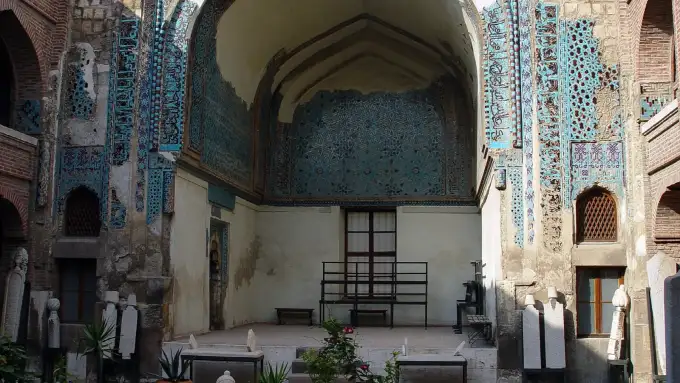
Sırçalı Medrese is a 13th-century Islamic school located in Konya, Turkey, a city that once served as the capital of the Anatolian Seljuq state. The name literally translates to Glazed Medrese, reflecting its distinctive interior tile work. Built during the reign of Sultan Kaykaus II, this structure stands as one of seven surviving madrasas in the city, preserving significant architectural heritage from the period when approximately twenty-four such institutions were constructed in Konya.
This site is in Konya, which is on UNESCO's World Heritage Tentative List (since 2000) as “Konya – A Capital of Seljuk Civilization”.
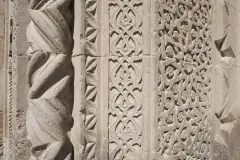
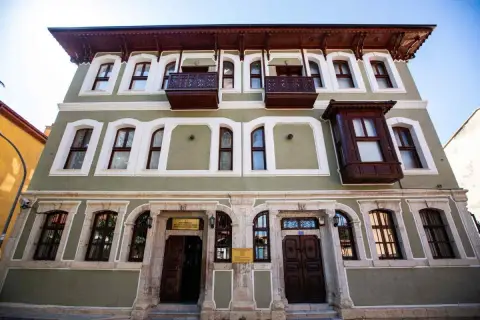
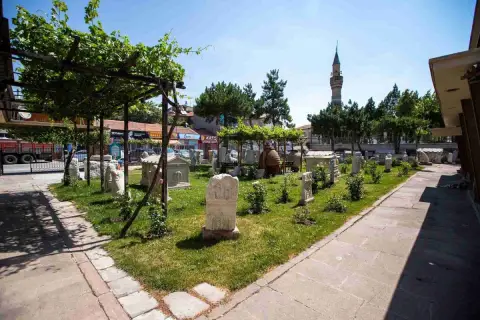
The medrese was established for the study of Fiqh, specifically the Hanafi school of Islamic law. It features a highly ornamented stone façade with geometric relief work and an inscription in Arabic calligraphy above the entrance. Today, the building serves as the Museum of Gravestones, housing historical artifacts from Roman, Byzantine, Seljuk, and Ottoman eras, while retaining its original educational layout and decorative elements.
History
The Sırçalı Medrese was built in 1242 during the reign of the Seljuk sultan Kaykaus II. It was commissioned by Emir Bedrettin Muslih, also known as Badr al-Din Muslih, who held titles such as mentor, servant, and teacher in service to the Sultan. The foundation inscription indicates the structure was endowed for scholars and students of law following the Hanafi madhab. The patron died after 1258 CE, and the madrasa continued to function as an educational institution throughout both the Seljuq and Ottoman periods.
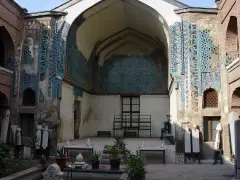
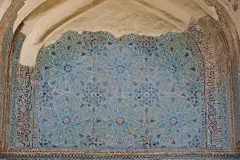
By the 17th century, the iwan vault had collapsed, leading to the building's decline. It was entirely abandoned as an educational structure by the 19th century. Since then, the medrese has undergone several renovations to restore it to a form closely resembling its original state. The interior decoration, which gave the building its name, consists of colorful tiles, though much of this has been lost over time. Today, only specific areas, including the western iwan and certain ceiling sections, retain their original tile decorations.
What to See
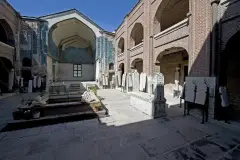
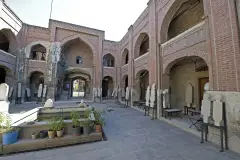
Visitors can explore the medrese's two-story layout, which is oriented on an east-west axis. The central rectangular courtyard features a basin and is surrounded by two stories of student cells. A large iwan, located three steps above the courtyard, was used for lectures and likely served as a prayer hall, evidenced by a mihrab on its southeast wall. Flanking domed rooms served as winter classrooms, while the iwan was used in other seasons to accommodate Konya's harsh climate.
- The main western iwan retains original tile mosaic work in light-blue, dark-blue, and manganese colors.
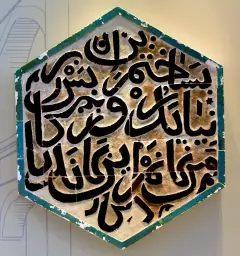
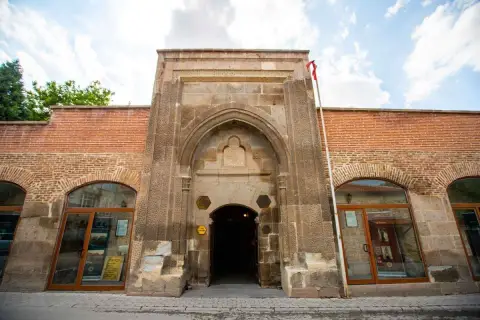
- The stone façade displays relief work with various geometric patterns and a marble inscription in thuluth script.
- A tomb on the northern side contains three anonymous cenotaphs, one possibly belonging to the patron.
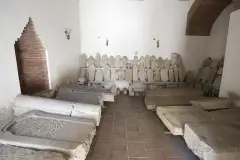
- The building now houses the Museum of Gravestones, featuring Roman, Byzantine, Seljuk, and Ottoman gravestones.
Visiting Tips
Wear comfortable shoes as the site involves walking on stone floors and ascending steps to access the main iwan and tomb areas. The building is a former place of worship and educational institution, so modest dress is recommended out of respect for its historical and religious significance.
Combine your visit with nearby historical sites in the Sahib Ata neighborhood, which is located south of Ala’ al-Din. This area offers a concentrated look at Konya's Seljuq architectural heritage, allowing for a comprehensive exploration of the city's medieval history.
Tours that visit Sırçalı Medrese
Explore Sırçalı Medrese on one of our guided tours — daily excursions, private tours and group tours that include this site.
Hotels near Sırçalı Medrese
- Hotel Balikcilar ★★★★ 0.8 km
- Bera Konya Hotel ★★★★ 1.3 km
- Özkaymak Park Hotel ★★★★ 2.0 km
- Gherdan Gold Otel ★★★★ 10.9 km
- Meram Park Hotel ★★★ 0.2 km
- Doğanay Otel 0.2 km
More Museums in Konya
Sırçalı Medrese – Frequently Asked Questions
What is Sırçalı Medrese?
Sırçalı Medrese is a 13th-century Islamic school located in Konya, Turkey, a city that once served as the capital of the Anatolian Seljuq state.
Where is Sırçalı Medrese located?
Sırçalı Medrese is in Meram, Konya, Turkey.
Do children need a ticket at Sırçalı Medrese?
Children aged 0–6 enter Sırçalı Medrese free of charge. Visitors aged 7 and over need a full ticket.
Can I visit Sırçalı Medrese on a guided tour?
Yes. Inca Tour visits Sırçalı Medrese on guided tours such as 4 Days Konya City & Cooking Tour.
What other museums can I visit in Konya?
Other museums in Konya include Konya Sahip Ata Foundation Museum, Konya Ethnography Museum and Konya Akşehir Nasreddin Hodja Museum of Archaeology and Ethnography.