Birgi, Izmir
📍 Ödemiş, İzmir, Izmir, Turkey
Nestled at the foot of the Bozdağ mountains in the Ödemiş district of İzmir, Birgi is an exceptionally preserved historic town celebrated for its traditional architecture. Travellers visit to explore its fourteenth-century Aydınoğlu beylik heritage, monumental timber mansions, and atmospheric cobbled lanes along the stream.
Photos via Wikimedia Commons: Volker Höhfeld (CC BY-SA 4.0) · Volker Höhfeld (CC BY-SA 4.0) · Volker Höhfeld (CC BY-SA 4.0) · Volker Höhfeld (CC BY-SA 4.0)
History of Birgi
In antiquity, the settlement was known as Dios Hieron (Sanctuary of Zeus), later entering the Roman province of Asia following the annexation of Pergamon. Renamed Christoupolis in the seventh century and Pyrgion by the twelfth century, the town was also an ancient Christian bishopric whose delegates attended the Council of Ephesus in 431 and subsequent councils in Constantinople.
Pyrgion fell to Turkish rule in 1307 and became the capital of the Aydınoğlu beylik. Under ruler Mehmed Bey, the town grew into a vibrant administrative and scholarly hub, inspiring the renowned medieval traveller Ibn Battuta to visit and attend academic lectures. In 1312, Mehmed Bey commissioned the landmark Great Mosque, which established Birgi as a masterwork of early Turkish-Anatolian civic planning.
Birgi was incorporated into the Ottoman Empire in 1390, retaining high scholastic stature. In the sixteenth century, the eminent scholar Birgivi Mehmet Efendi taught here, while later centuries saw prominent local dynasties erect splendid wooden dwellings, culminating in the late eighteenth-century Çakırağa Mansion.
Birgi's physical heritage combines medieval civic structures, ancient city walls, and water architecture. Recognized by preservation bodies and added to the UNESCO World Heritage Tentative List in 2012, the town endures as a vital architectural sanctuary.
Things to Do in Birgi
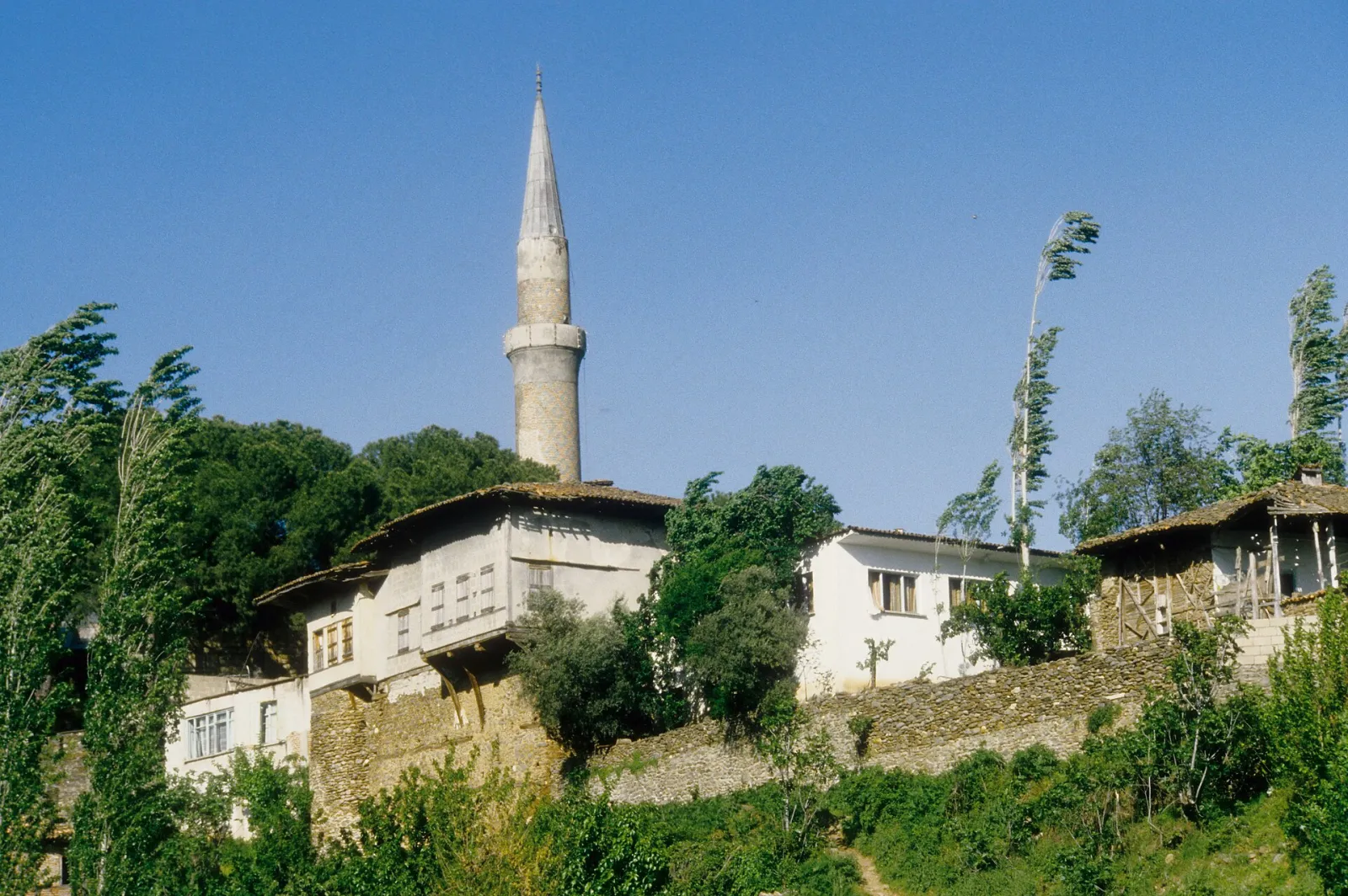
Start your exploration at the Aydınoğlu Mehmet Bey Mosque, an extraordinary monument dating from 1312. Admire its intricate turquoise and cobalt tile work, finely carved walnut minbar, and antique marble columns repurposed from ancient sites. Nearby, explore other Aydınoğlu beylik structures, including the fourteenth-century Aydınoğlu Baths and the stone Sultanşah Mausoleum, which showcase early Anatolian Islamic stonework.
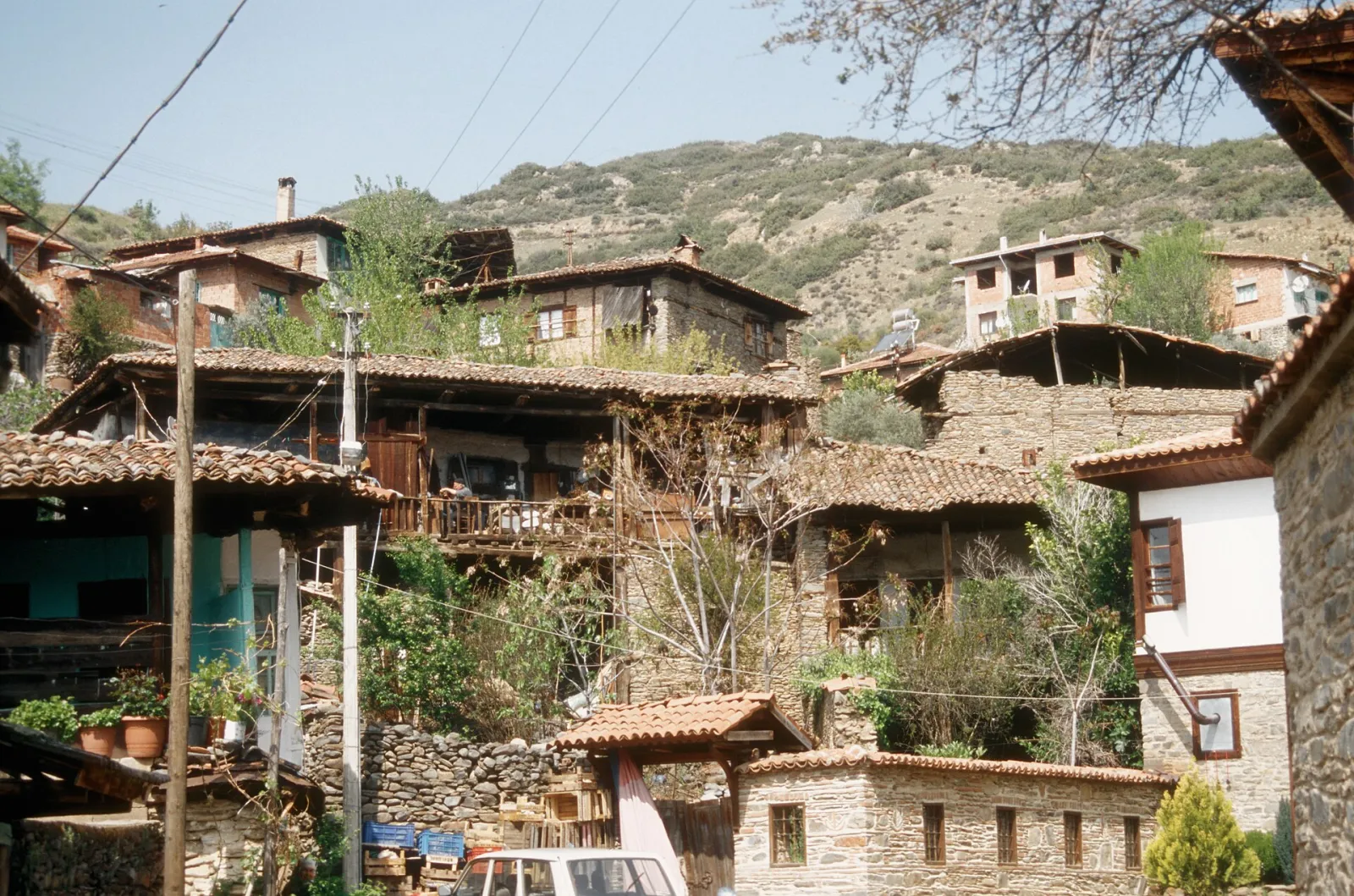
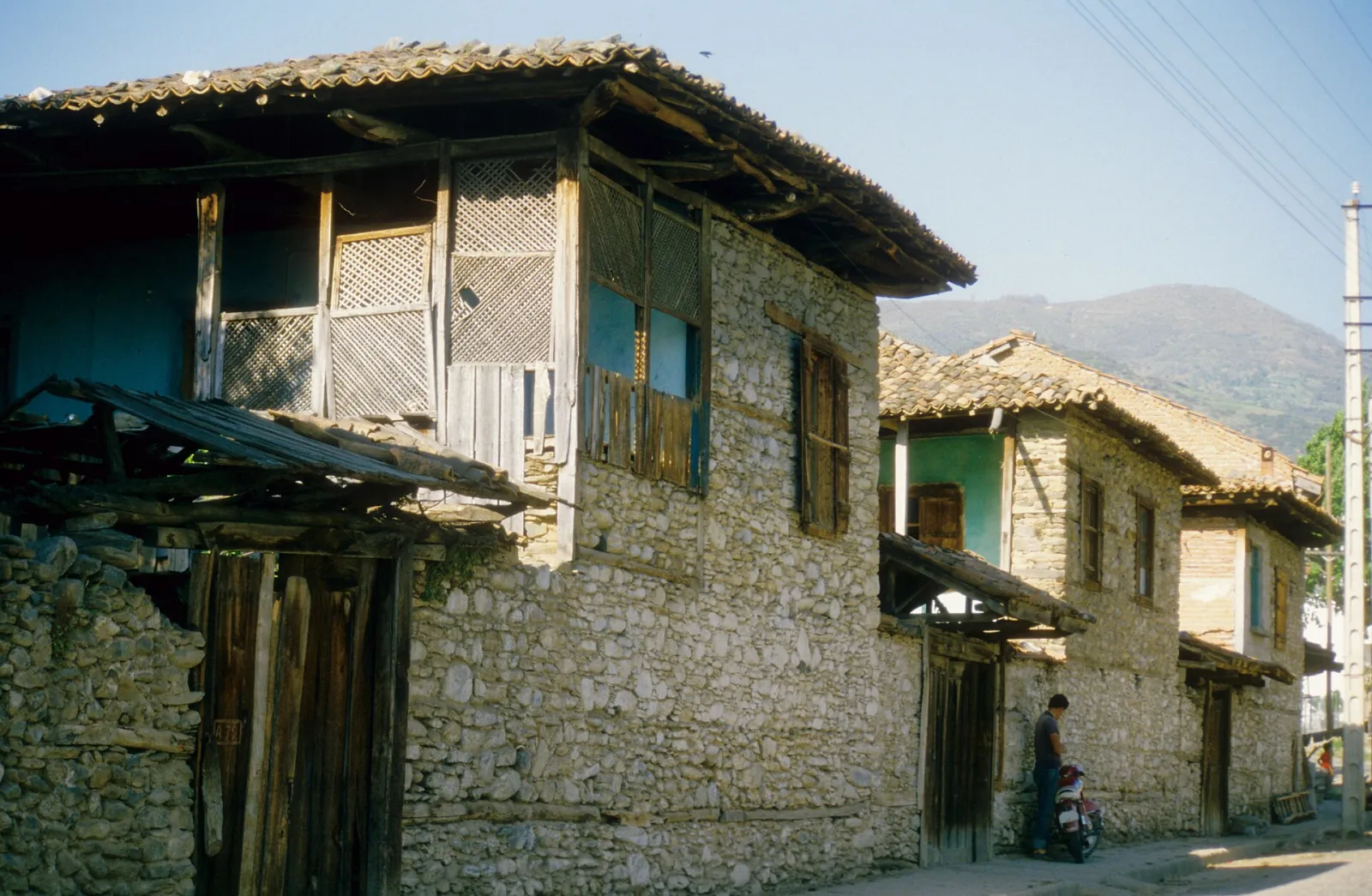
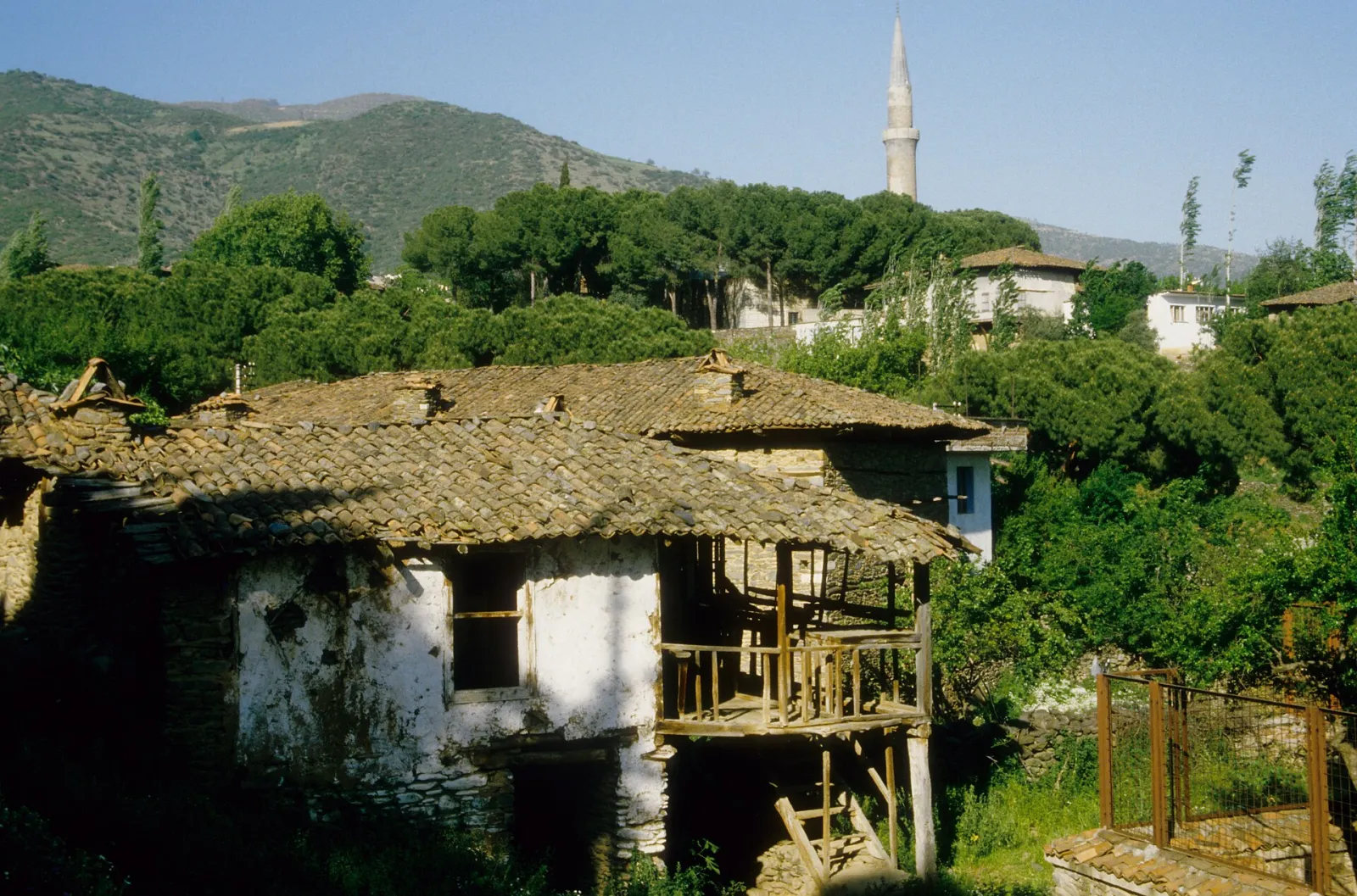
Walk across the stone bridges spanning the central stream to tour Birgi's residential quarters. The pinnacle of this domestic heritage is the Çakırağa Mansion, a preserved late eighteenth-century three-storey residence featuring broad wooden eaves, richly carved ceilings, and rare panoramic wall frescoes depicting Istanbul and İzmir. Stroll the shaded cobblestone alleys to observe vernacular Ottoman architecture, including the nineteenth-century Sandıkoğlu Mansion.
Climb toward the upper slopes to inspect the remnants of the medieval city walls and the ancient defensive fortifications. Visit the sixteenth-century Birgivi Mehmet Efendi Madrasa and the scholar's serene hillside tomb, revered for centuries by theological students. Continuing through the historic core, visitors will pass old fountains and stone buildings of the Ottoman period.
Top Sights in Birgi
Aydınoğlu Mehmet Bey Mosque
Commissioned in 1312, this grand mosque features historic Seljuk-style tiles, ancient reused columns, and an intricate carved walnut minbar.
Çakırağa Mansion
A remarkable late eighteenth-century timber mansion famous for its ornate woodwork and detailed wall frescoes of Ottoman cities.
Birgivi Mehmet Efendi Madrasa and Tomb
A sixteenth-century theological complex and hillside burial place dedicated to one of the Ottoman Empire's prominent scholars.
Ottoman Vernacular Architecture
Centuries-old stone and timber houses line both banks of the village stream, illustrating classic Aegean regional townscapes.
Medieval Walls
Remains of the town's medieval defensive walls on the slopes above the historic core.
Travel Tips for Birgi
Getting there: Birgi is situated in the Ödemiş district, roughly 110 kilometres east of central İzmir. Regular minibuses connect the bus terminal in Ödemiş directly to Birgi, making it an easy day-trip destination by road from İzmir or nearby Aegean towns.
Best time to visit: Spring and autumn offer pleasant weather for walking along the hilly, stone-paved lanes. Summer temperatures in the valley can be warm, while winter brings crisp mountain air from the Bozdağ range.
Footwear and etiquette: Sturdy walking shoes with reliable grip are recommended for navigating the inclined, uneven cobblestones. Modest dress is required when entering functioning prayer spaces like the Great Mosque.
Visiting the site: current opening days and visitor information are on our museum page: İzmir Birgi Çakırağa Mansion.
Hotels in Birgi
Hotels within walking distance of Birgi — request your room online, we reply within 24 hours.
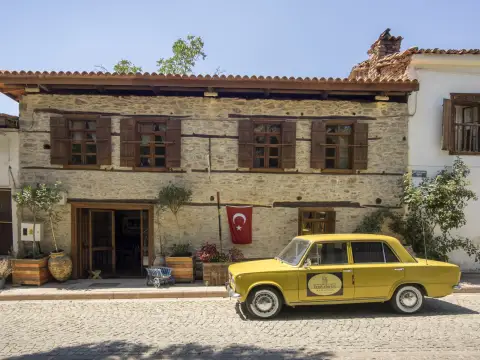
Yeni Gelin Evi BİRGİ
0.1 km from Birgi
Birgi Otel Saliha hanım Taş Konak
0.2 km from Birgi
Birgi Çınaraltı Pansiyon
0.2 km from Birgi
Birgi Ata Konağı
0.4 km from Birgi
Kadılar Paşazade Konağı
0.5 km from Birgi
Hayal Tadında Glamping & Restaurant
0.6 km from Birgi
Birgi Lavinya Otel
0.6 km from Birgi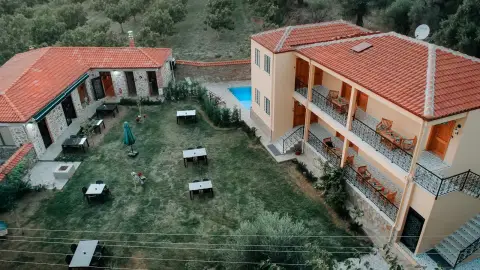
Rukim otel
1.1 km from Birgi
Çiftçi Otel
8.1 km from Birgi
Bade Gölcük
8.2 km from Birgi
Güven Otel Ödemiş
8.5 km from BirgiBirgi – Frequently Asked Questions
Where is Birgi located?
Birgi is located in the Ödemiş district of İzmir Province in western Turkey. It sits in a verdant valley at the foothills of the Bozdağ mountain range, approximately 110 kilometres east of the city of İzmir.
Why is Birgi historically significant?
Birgi served as the capital of the Aydınoğlu beylik in the fourteenth century before becoming an influential Ottoman intellectual centre. Its exceptional preservation of medieval and Ottoman buildings earned it a place on the UNESCO World Heritage Tentative List.
What are the primary landmarks to see in Birgi?
The two primary sights are the fourteenth-century Aydınoğlu Mehmet Bey Mosque and the late eighteenth-century Çakırağa Mansion. Visitors also explore the tomb of Birgivi Mehmet Efendi, medieval baths, and restored historic stone mansions.
How long should travellers spend in Birgi?
Most visitors spend between three to five hours exploring the historic core on foot. This provides ample time to visit the major architectural sites, stroll the streamside streets, and admire the mountain scenery.
Are the historical sights suitable for walking tours?
Yes, Birgi's compact layout makes it ideal for walking, though streets are paved with uneven cobblestones and feature moderate inclines. Comfortable, non-slip footwear is strongly advised for navigating the village lanes.