Pergamon, Izmir
📍 Bergama, Izmir, Turkey · Bergama
Pergamon, a UNESCO World Heritage site near Bergama, was the capital of the Attalid dynasty and a major Hellenistic cultural centre. Travellers visit to explore its dramatic acropolis, the famous Altar, and significant early Christian history.
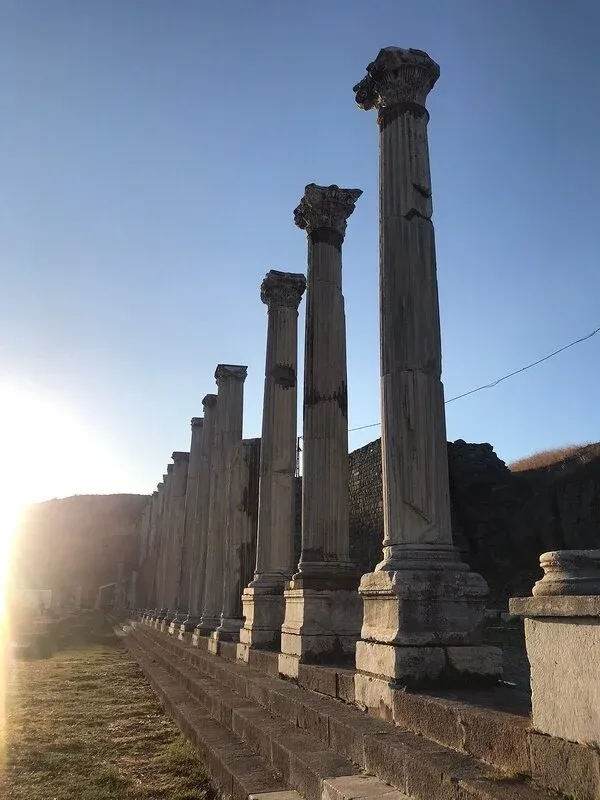
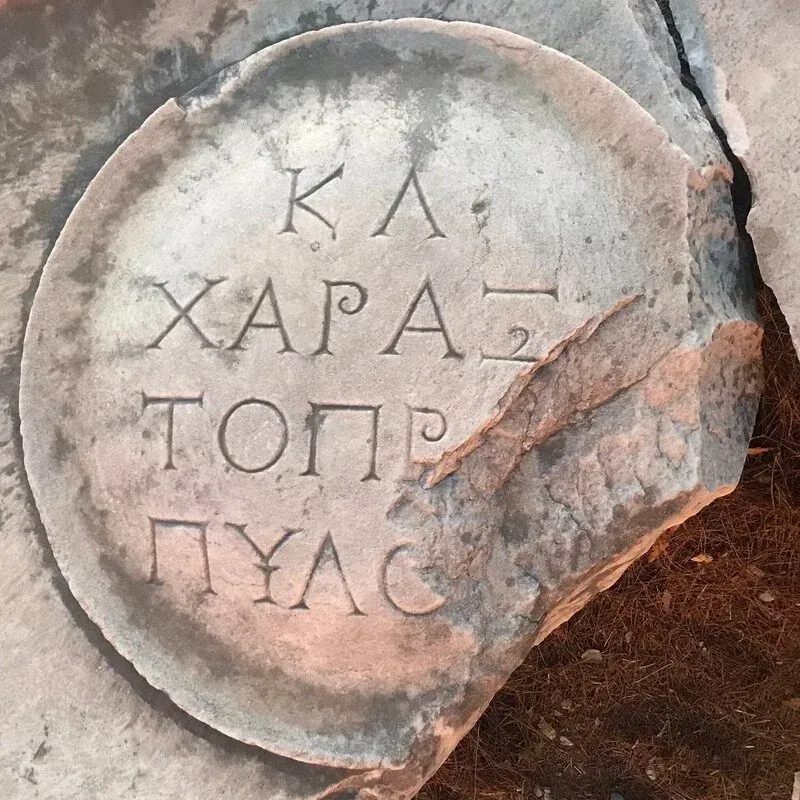
History of Pergamon
Pergamon’s recorded history begins in the Archaic period, with archaeological finds dating to the late 8th century BC. It gained literary prominence when Xenophon’s Ten Thousand arrived in 400 BC. Under the Persian Empire, it served as a base for satraps, but Alexander the Great’s conquests eventually removed Persian control. Few pre-Hellenistic structures remain due to later extensive construction projects that reshaped the terrain.
The city’s golden age began in 281 BC when Philetaerus founded the Attalid dynasty. This family ruled until 133 BC, transforming Pergamon into one of the Greek world’s most powerful kingdoms. The Attalids were loyal allies of Rome, fighting against Macedon and the Seleucid Empire. Their strategic partnerships expanded Pergamon’s territory significantly, particularly after the Peace of Apamea in 188 BC.
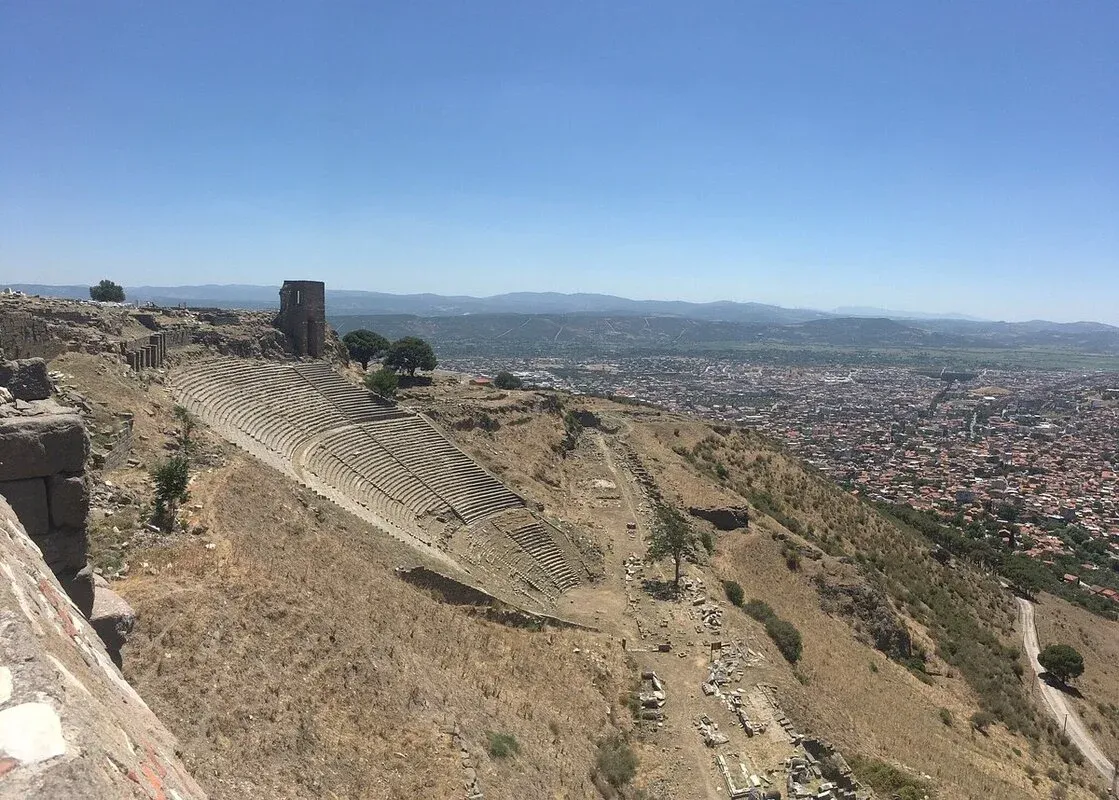
Under Eumenes II and Attalus II, Pergamon reached its architectural apex. The city was rebuilt on a monumental scale, with a massive new city wall enclosing approximately 90 hectares. The acropolis, situated on a 335-metre-high andesite mesa, housed the renowned Library of Pergamon and the iconic Altar. These structures reflected the kingdom’s wealth and its role as a centre of learning and art.
In 133 BC, the last Attalid king bequeathed his kingdom to Rome, making Pergamon a provincial capital. It remained a significant urban centre through the Roman and Byzantine periods. Notably, it was one of the seven churches of Asia mentioned in the New Testament. Today, the site is recognised globally for its historical significance and well-preserved Hellenistic remains.
Things to Do in Pergamon
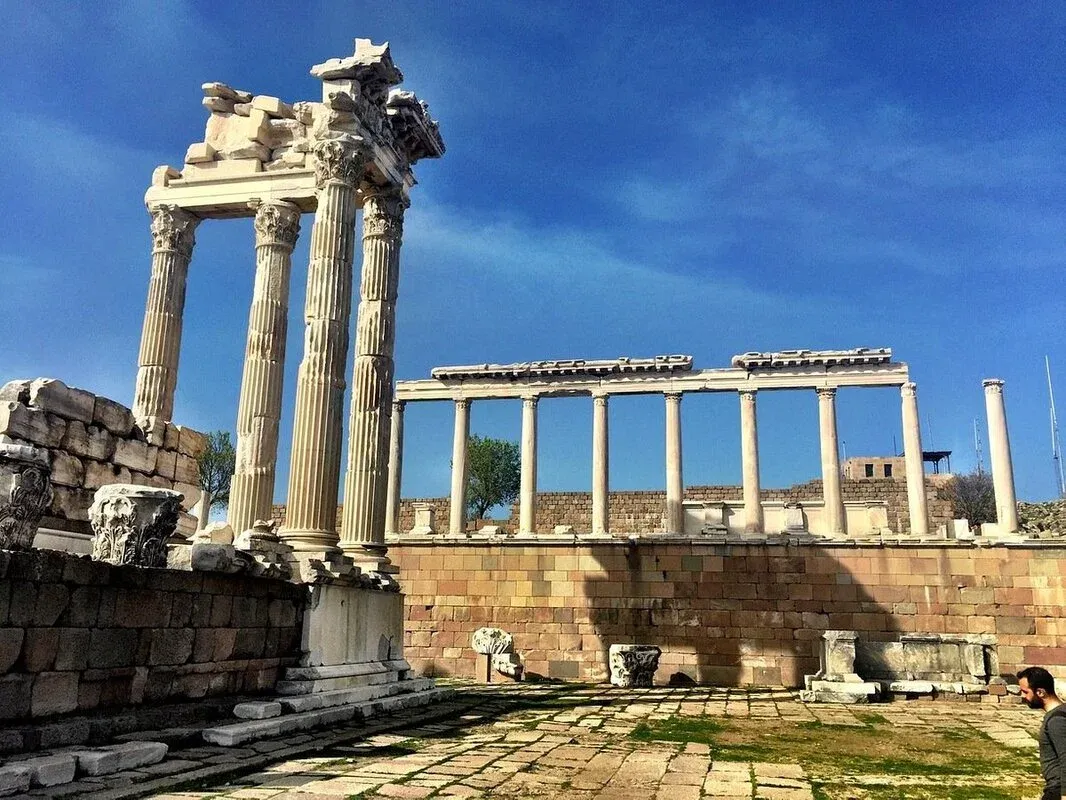
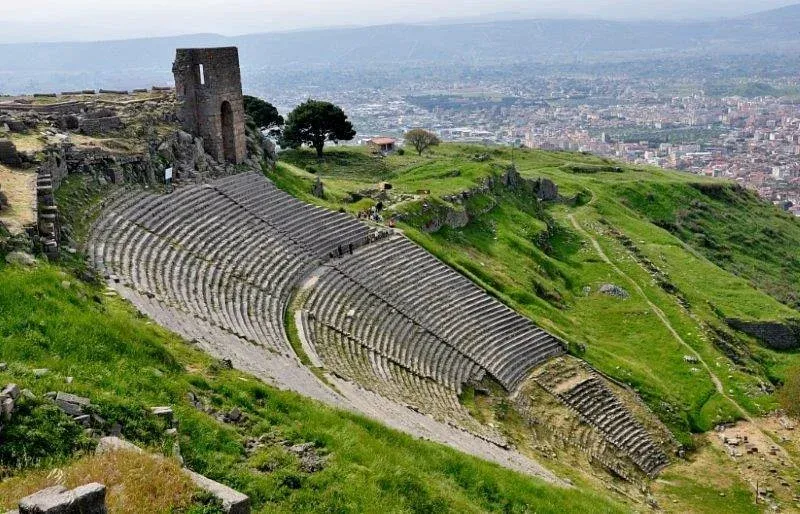
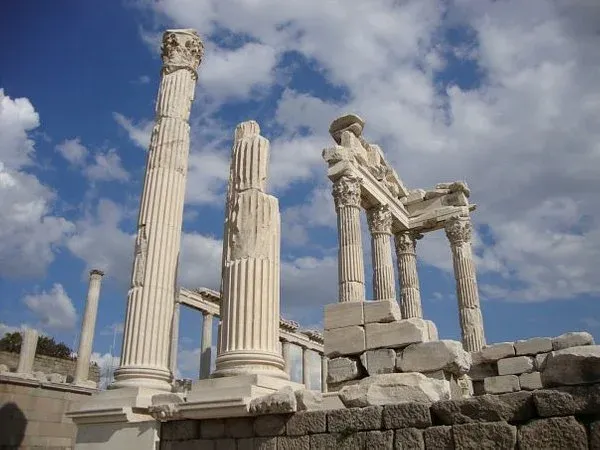
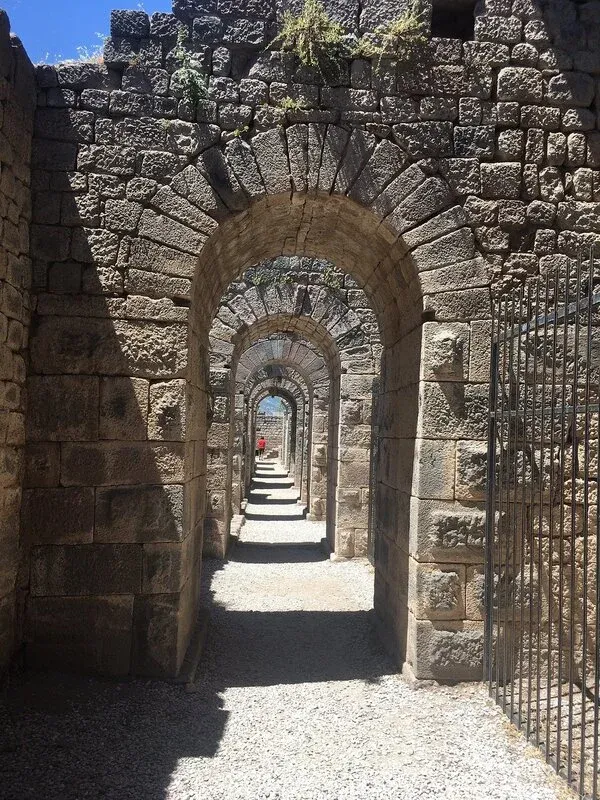
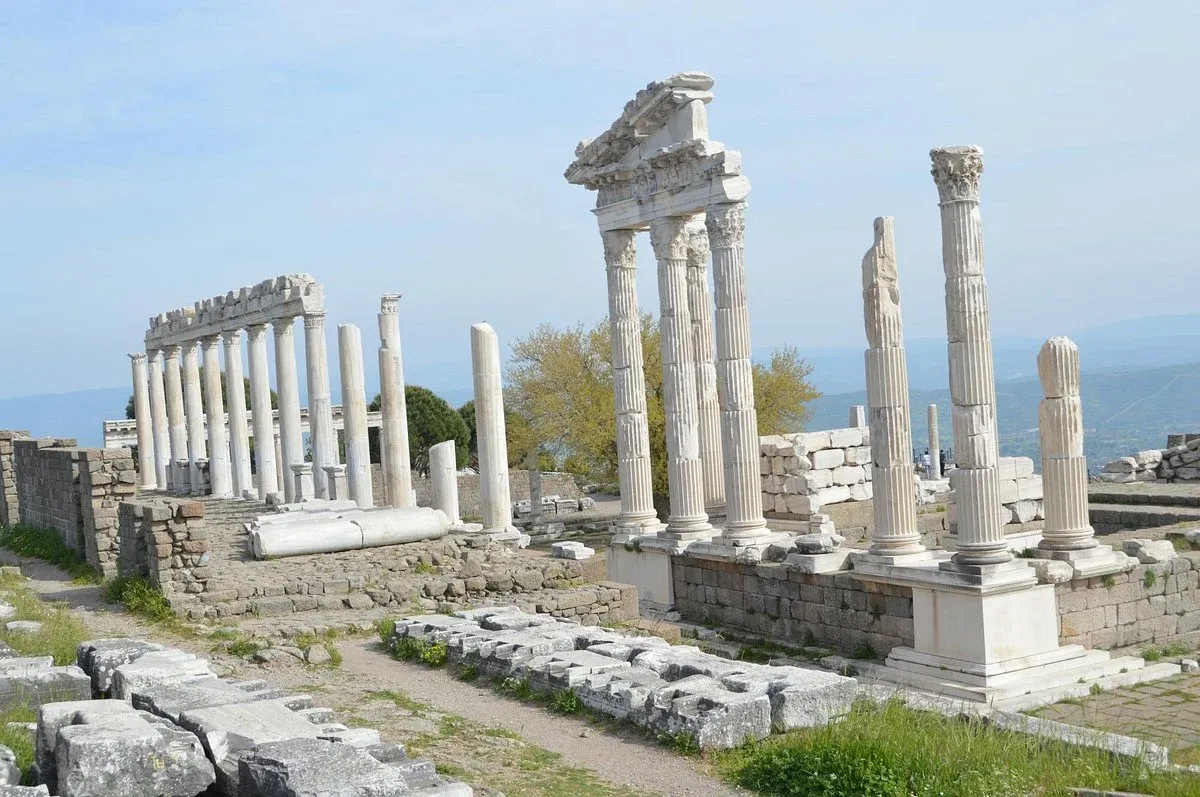
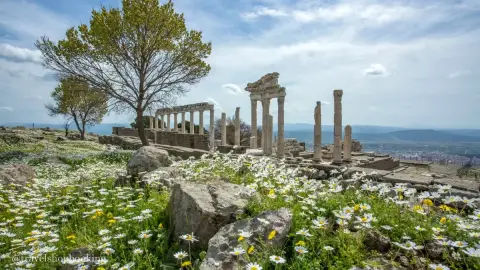
The primary attraction is the Acropolis, perched on a steep andesite mesa. Visitors can explore the ruins of the Pergamon Altar, the Temple of Trajan, and the extensive library foundations. The steep ascent offers panoramic views of the Caicus plain, though the climb is physically demanding. The site’s layout clearly demonstrates the sophisticated engineering of the Hellenistic period.
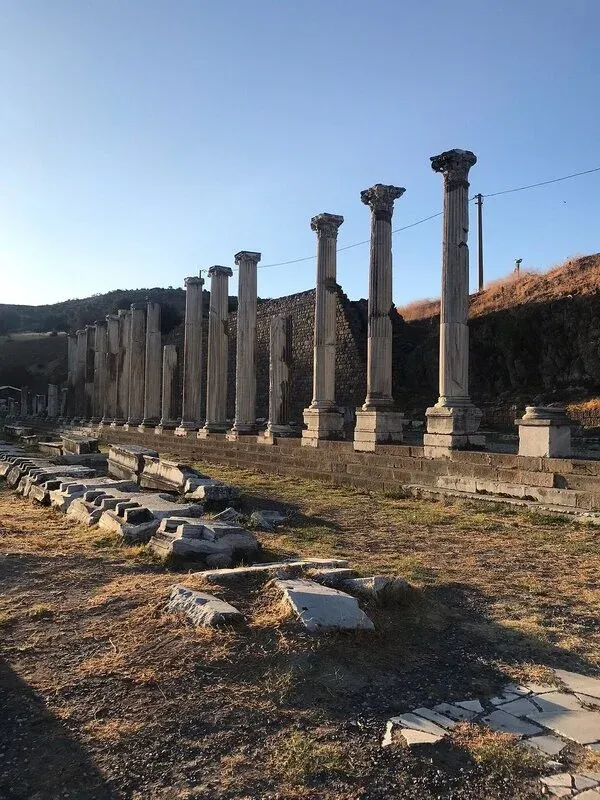
In the lower town, the Red Basilica (Kızıl Avlu) is a must-see. Built in the Roman period as a vast temple to Egyptian gods and later converted into a church, it features striking red brickwork. On the other side of the town lies the Asklepion, an ancient healing centre where patients sought cures through ritual bathing and sleep. The site includes a sacred spring and a tunnel that once transported patients to the temple.
The Bergama Museum houses many artefacts excavated from the site, including fragments of the Altar and sculptures. It provides essential context for understanding the city’s political and religious history. The museum’s collection highlights the artistic achievements of the Attalid dynasty and the city’s role in the ancient world.
For a broader experience, wander through the old quarter around the Kızıl Avlu, where the city’s layered history, spanning pagan, early Christian and Islamic periods, is still visible. The surrounding town of Bergama also offers a glimpse into traditional Turkish life with its historic bazaar and Ottoman-era architecture.
Top Sights in Pergamon
Pergamon Altar
A monumental Hellenistic structure known for its intricate frieze depicting the Gigantomachy. The original is in Berlin, but the site remains a focal point of the acropolis.
The Acropolis
The upper city built on a 335-metre-high mesa, featuring the ruins of the Temple of Trajan and the Library of Pergamon.
The Asklepion
An ancient healing centre located below the acropolis, featuring a sacred spring, a tunnel, and a theatre.
Red Basilica
A large brick structure originally built as a temple to Egyptian gods, later converted into a church, known for its distinctive red colour.
Bergama Museum
A local museum displaying artefacts from the excavations, including sculptures and architectural fragments from the ancient city.
Travel Tips for Pergamon
Getting there: The ruins of Pergamon rise directly above the modern town of Bergama, about 100 kilometres north of İzmir, which is reached by bus or car. A cable car runs from the lower town up to the acropolis; the Asklepion and the Red Basilica lie in the town itself.
Best time to visit: Spring and autumn offer the most pleasant weather for exploring the outdoor ruins. Summers can be extremely hot, making early morning visits advisable to avoid the midday heat and crowds. Winter visits are quieter but may involve rain and cooler temperatures.
What to wear / bring: Wear sturdy footwear with good grip, as the paths on the acropolis are rocky and steep. Bring sufficient water, especially during warmer months, as shade is limited on the upper terraces. A hat and sunscreen are recommended for protection against the strong sun.
Visiting the site: current opening days and visitor information are on our museum page: İzmir Bergama Museum, İzmir Bergama The Archaeological Site of Asklepion, İzmir Bergama Pergamon Acropolis, İzmir Bergama Red Basilica.
Day Tours that Visit Pergamon
Guided daily excursions in Izmir that include Pergamon.
 Day Tour
Shared
Pergamon Tour from Izmir – Acropolis & Asklepion (Shared)
 Private Day Tour
Private
Ephesus & Şirince Village Private Tour from Pergamon
 Day Tour
Shared
Ephesus & Şirince Village Tour from Pergamon (Group)
 Private Day Tour
Private
Daily Pergamon Tour from Izmir (Private)
Day Tour
Shared Daily Pergamon Tour from Izmir (Shared)
Hotels in Pergamon
Hotels within walking distance of Pergamon — request your room online, we reply within 24 hours.

Elaia Hotel
0.5 km from Pergamon
Asclepius Boutique Hotel & Cafe
0.5 km from Pergamon
Hera Boutique Hotel
0.6 km from Pergamon
Aristonicus Hotel
0.7 km from Pergamon
Rhea Guesthouse
0.7 km from Pergamon
Attalos Suites Hotel
0.9 km from Pergamon
Ayvazali Hotel
3 km from Pergamon
Berksoy Hotel
3.8 km from Pergamon
Galenos Hotel
4 km from PergamonAirport Transfers to Pergamon
Private door-to-door transfers to Bergama (Izmir) — price per vehicle, one way, meet & greet included.
✈️ Istanbul Airport (IST) → Bergama (Izmir)
Book this transfer →| Vehicle | Passengers | Price (one way) |
|---|---|---|
| Mercedes Vito | up to 5 | €550 |
✈️ Sabiha Gokcen Airport (SAW) → Bergama (Izmir)
Book this transfer →| Vehicle | Passengers | Price (one way) |
|---|---|---|
| Mercedes Vito | up to 5 | €466 |
Pergamon – Frequently Asked Questions
Is the original Pergamon Altar still at the site?
No, the original altar was removed to Berlin in the 19th century. However, the foundations and some fragments remain at the site, and the museum in Bergama displays related artefacts.
How difficult is the walk to the Acropolis?
The walk is steep and involves climbing many stairs on uneven terrain. Most visitors take the cable car up from the lower town and then explore the summit on foot, which still involves uneven paths and steps.
What is the significance of the Asklepion?
The Asklepion was a healing centre dedicated to Asclepius, the god of medicine. Patients would undergo rituals, including sleeping in the temple, to seek cures from the god.
Can I visit Pergamon in a day trip from Izmir?
Yes, Pergamon is a popular day trip from Izmir. The drive takes about an hour and a half each way, allowing ample time to explore the acropolis, the Asklepion, and the museum.
Why is Pergamon a UNESCO World Heritage site?
It was inscribed in 2014 for its outstanding universal value as a major Hellenistic cultural centre. The site demonstrates exceptional urban planning and architectural innovation.