Tekfur Palace Museum (Palace of the Porphyrogenitus)
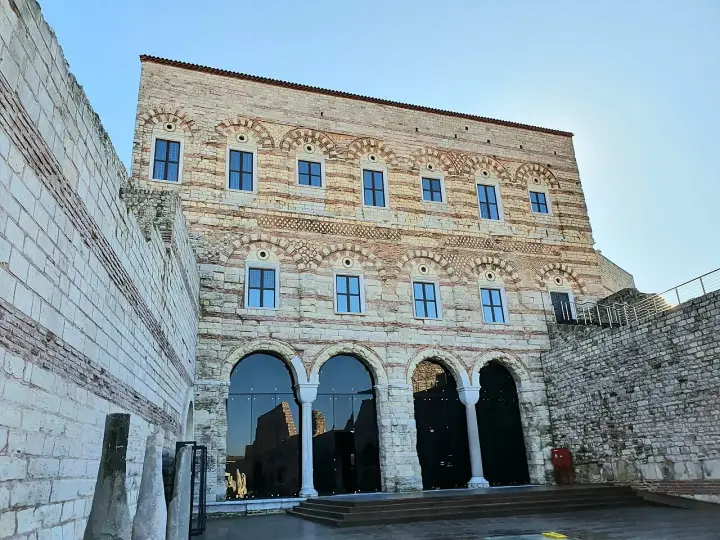
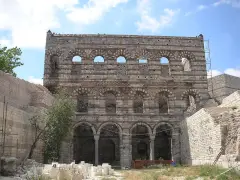
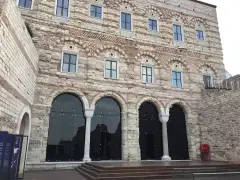
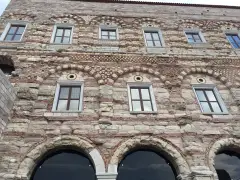
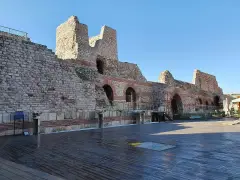
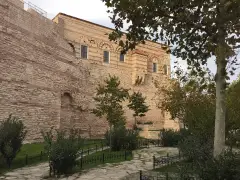
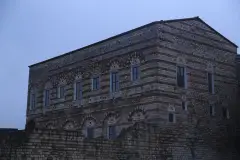
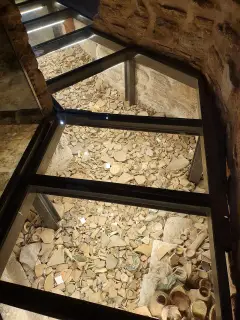
Tekfur Palace, the Palace of the Porphyrogenitus, is the best-preserved Byzantine imperial palace in Istanbul, set into the city walls and reopened as a museum after a long restoration.
ℹ️ About Tekfur Palace Museum (Palace of the Porphyrogenitus)
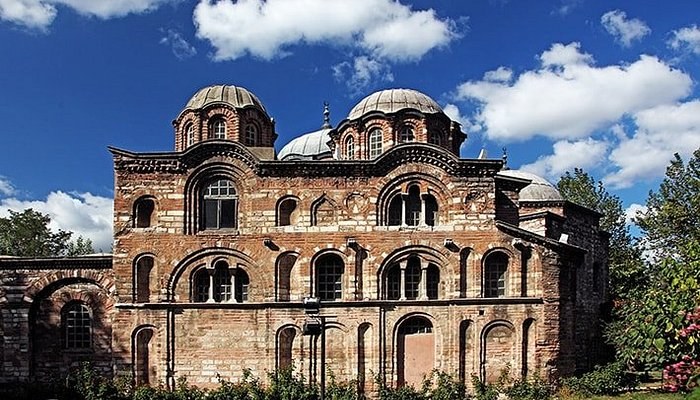
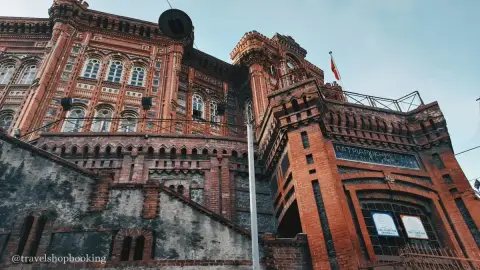
Built into the northern stretch of the city walls near Edirnekapı, Tekfur Palace – known in English as the Palace of the Porphyrogenitus – is the only Byzantine imperial palace in Istanbul whose walls still rise to their full height. Its three-storey façade of red brick and white stone, patterned in the colourful Palaiologan style, is one of the finest examples of late Byzantine civil architecture anywhere. After years of restoration, the building reopened as the Tekfur Palace Museum in 2019 and is a highlight for anyone interested in Byzantine Istanbul.
History
The palace was built in the late 13th or early 14th century as part of the Blachernae palace complex, the residence of the later Byzantine emperors in the north-west corner of the city. Its name refers to a porphyrogenitus, a prince "born in the purple", and the Turkish name Tekfur comes from the word used for Byzantine lords and rulers. Squeezed between the inner and outer walls, the building had a ground floor opening onto a courtyard through arches, and two upper floors with large windows and a top-floor hall.
After the Ottoman conquest of 1453 the palace was put to many different uses. In the 16th century it housed part of the imperial menagerie. In the early 18th century, under Sultan Ahmed III and his grand vizier Nevşehirli Damat İbrahim Pasha, a tile workshop was established here to revive Ottoman tile production, and the so-called Tekfur Sarayı tiles decorated mosques and fountains across the city. Later the building served as a glass and bottle workshop and as a poorhouse before falling into ruin. A long restoration by the Istanbul Metropolitan Municipality gave it a roof and floors again and turned it into a museum.
What to See
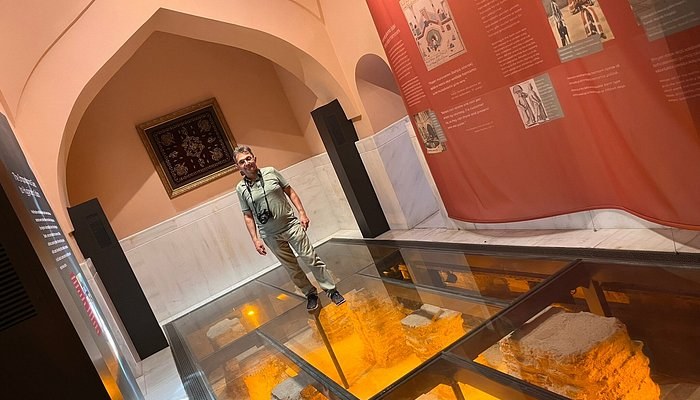
The museum combines the restored palace with exhibitions on its history, from the Byzantine court to the Ottoman tile kilns. Excavations around the building uncovered kilns and ceramic fragments, some of which can be seen under glass floors.
- The Palaiologan façade: brick and marble patterns typical of late Byzantine architecture.
- Tile workshop finds: fragments and kilns from the 18th-century Tekfur Sarayı workshop.
- Exhibition halls: displays tracing the building from Byzantine palace to Ottoman workshop.
- Upper floors and terraces: views over the land walls and the Golden Horn district.
- The courtyard: the space between the walls where the palace once opened to its garden.
Visitor Tips
The museum is open Tuesday to Sunday from 09:00 to 17:00 and closed on Mondays; check the current ticket price at the entrance. Allow about an hour. Tekfur Palace lies in the Ayvansaray–Edirnekapı area, away from the main tourist circuit, which makes it a perfect stop on a half-day Byzantine Istanbul tour together with the Chora (Kariye) Mosque and its mosaics, a stretch of the Theodosian Walls and the Fethiye Mosque. A guide brings the story of the last Byzantine emperors to life as you walk the walls between these sites.
Tours that visit Tekfur Palace Museum (Palace of the Porphyrogenitus)
Explore Tekfur Palace Museum (Palace of the Porphyrogenitus) on one of our guided tours — daily excursions, private tours and group tours that include this site.
 Private Tour
8 Days Seven Churches of Revelation: Istanbul, Pergamon, Sardis, Laodi...
 Private Day Tour
Istanbul City Walls Tour – Balat, Tekfur Palace & Yedikule Fortress
 Private Day Tour
Daily Fener & Balat Tour from Istanbul – Chora, Ahrida & Patriarchate...
 Day Tour
Daily Fener & Balat Tour from Istanbul – Chora, Ahrida & Patriarchate...
 Private Tour
9-Day Biblical Tour of Turkey
 Private Tour
15-Day St Paul's Biblical Tour of Turkey
 Group Tour
6 Day Istanbul (Byzantion) & Green Bursa Tour Package (Group Tour)
 Private Tour
6 Day Istanbul (Byzantion) & Green Bursa Tour Package
 Private Day Tour