Severan Bridge
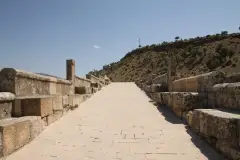
Photos: Bernard Gagnon, CC BY-SA 3.0 · Serhatburke, CC BY-SA 4.0 · Herbert Frank from Wien (Vienna), AT, CC BY 2.0 · Klearchos Kapoutsis from Santorini, Greece, CC BY 2.0 — via Wikimedia Commons
Explore the Severan Bridge in Adıyaman, a Roman arch bridge from 200 CE featuring Corinthian columns and historic inscriptions.
ℹ️ About Severan Bridge
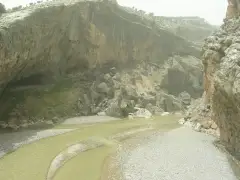
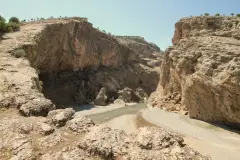
The Severan Bridge, also known as Cendere Köprüsü, is a historic Roman structure located in Adıyaman, southeastern Turkey. Situated approximately 55 km northeast of the city near the ancient settlement of Arsameia, it spans the Cendere Çayı creek on the provincial road connecting Kâhta and Sincik. This enduring monument stands as a significant example of ancient engineering within the region.
Constructed around 200 CE, the bridge remains in continuous use since its completion, making it one of the oldest active bridges in the world. It is positioned within a national park that includes Nemrut Dağı, a UNESCO World Cultural Heritage site, offering visitors a glimpse into the rich history of the Commagene civilization and the Roman Empire.
History
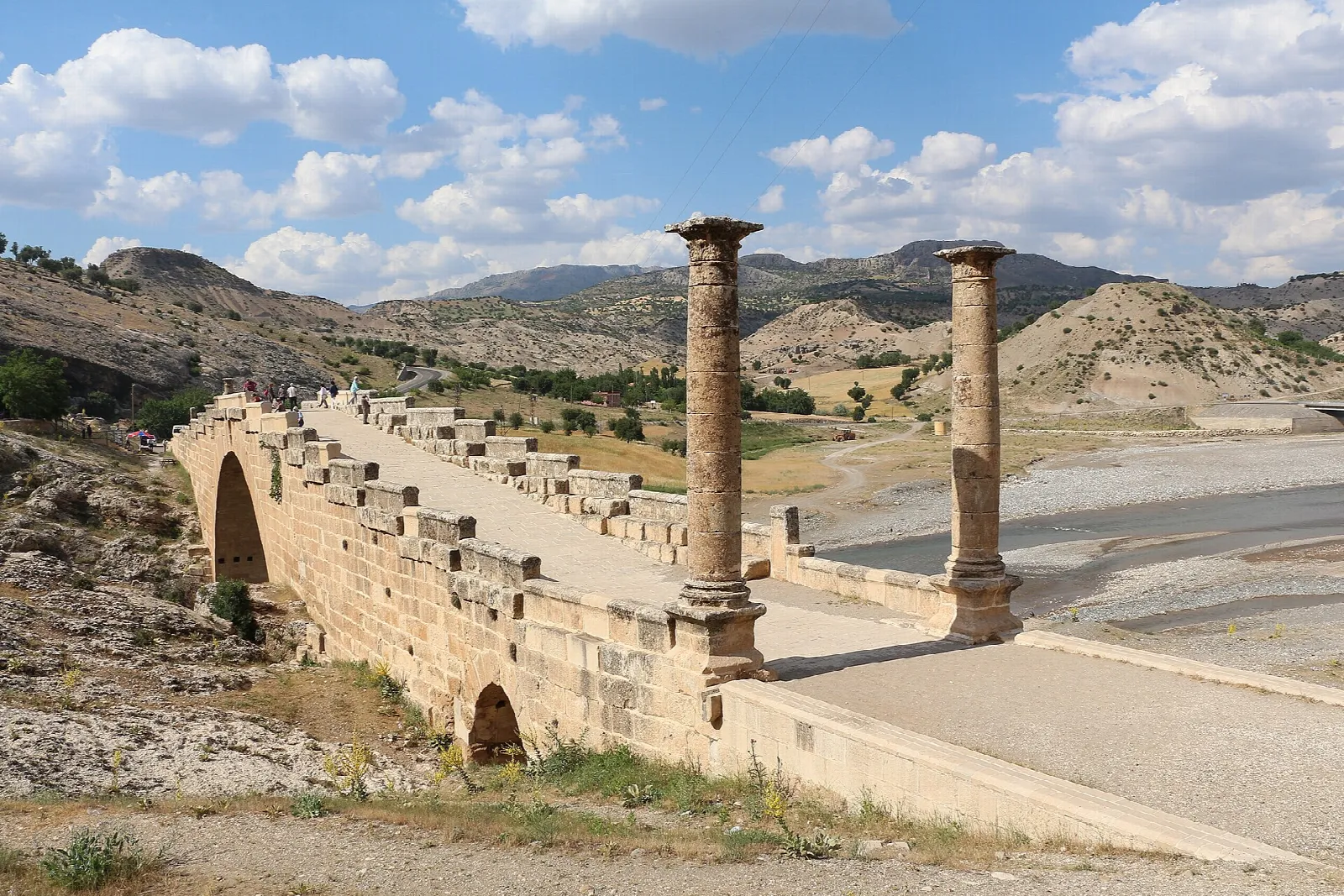
The bridge was originally constructed as a simple, unadorned single arch on two rocks at the narrowest point of the creek. It was rebuilt by the Legio XVI Gallica, garrisoned in the ancient city of Samosata, to support military campaigns against Parthia. The structure features a clear span of 34.2 m, making it the longest known extant Roman arch bridge, with a total length of 120 m and a width of 7 m.
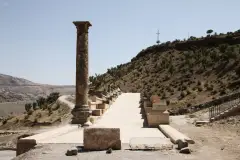
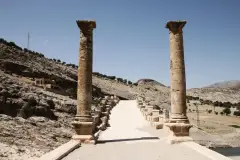
Commagenean cities erected four Corinthian columns on the bridge to honor Emperor Lucius Septimius Severus, his wife Julia Domna, and their sons Caracalla and Publius Septimius Geta. Two columns on the Kâhta side were dedicated to the Emperor and his wife, while two on the Sincik side honored their sons. However, the column dedicated to Geta was removed after his assassination by Caracalla, who ordered his name erased from all inscriptions.
Described by archaeologists Osman Hamdi Bey and Osgan Efendi in 1883, the bridge underwent restoration in 1997. Although vehicular traffic was once restricted to 5 tons, the bridge is now closed to vehicles, with a new road bridge built 500 m to the east.
What to See
Visitors can observe the impressive single-arch structure built from 92 rocks, each weighing 10 tons. The bridge is notable for its remaining three Corinthian columns, which stand 9–10 m in height. These columns are located on both sides of the bridge, with two on the Kâhta side dedicated to Septimius Severus and Julia Domna, and one on the Sincik side dedicated to Caracalla.
- The Latin inscription on the bridge detailing the dedication to the imperial family.
- The missing column base on the Sincik side, where Geta's column was removed.
- The surrounding landscape of the national park, which includes the ancient city of Arsameia.
Visiting Tips
Wear comfortable shoes suitable for walking on uneven surfaces and bring sun protection, as the site is exposed. Since the bridge is located within a national park containing Nemrut Dağı, consider combining your visit with nearby historical sights mentioned in the area.
More Museums in Adıyaman
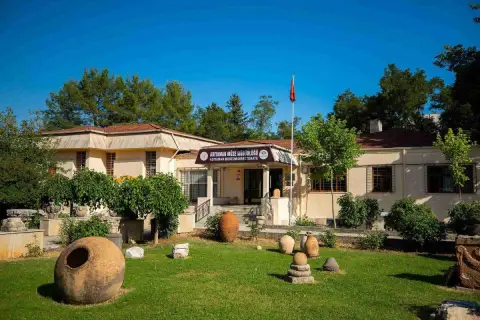
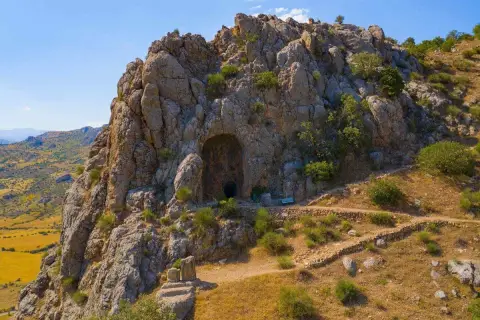
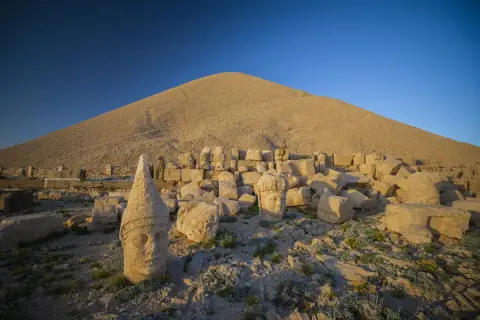
Severan Bridge – Frequently Asked Questions
What is Severan Bridge?
The Severan Bridge, also known as Cendere Köprüsü, is a historic Roman structure located in Adıyaman, southeastern Turkey.
Where is Severan Bridge located?
Severan Bridge is in Kahta, Adıyaman, Turkey.
Do children need a ticket at Severan Bridge?
Children aged 0–6 enter Severan Bridge free of charge. Visitors aged 7 and over need a full ticket.
What other museums can I visit in Adıyaman?
Other museums in Adıyaman include Adıyaman Museum, Adıyaman Arsameia Archaeological Site and Adıyaman Mount Nemrut.