İvriz monuments
Photos: hakan kozan, CC BY 3.0 · nurettingülay(from T…, CC BY-SA 3.0 · Mark Landon, CC BY 4.0 · Klaus-Peter Simon, CC BY 3.0 · Rug tracker archive, 2012/05/01, Public domain — via Wikimedia Commons
Explore the İvriz monuments in Konya, featuring 8th-century BC Hittite rock reliefs and inscriptions depicting King Warpalawas and the god Tarhunzas.
ℹ️ About İvriz monuments
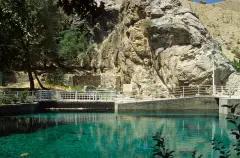
The İvriz monuments are a group of Hittite monuments located in south-central Anatolia, specifically in the town of Aydınkent, formerly known as İvriz. Situated in Konya Province, Turkey, this historical site lies about 17 km south-east of the modern town of Ereğli. The primary feature is a significant rock relief on a cliff face near the source of the İvriz Suyu, where water flow has caused damage in modern times.
This site is part of “İvriz Cultural Landscape”, which is on UNESCO's World Heritage Tentative List (since 2017).
These monuments date back to the late 8th-century BC and are associated with the Neo-Hittite-Aramean principalities. The site includes the main relief, an inscribed stele discovered in 1986, and other fragments. While some original artifacts are housed in the Konya Ereğli Museum, the in-situ reliefs remain a key archaeological destination for visitors exploring the region's ancient heritage.
History
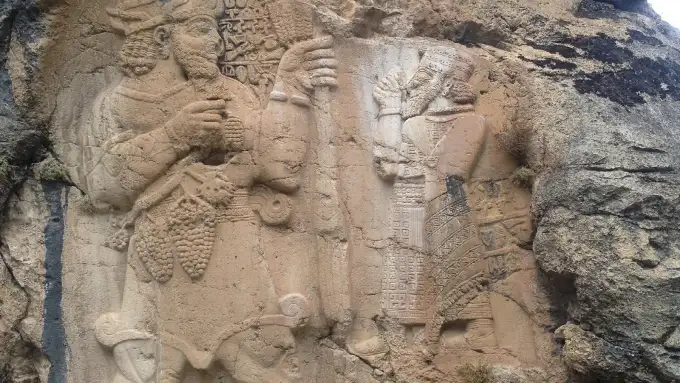
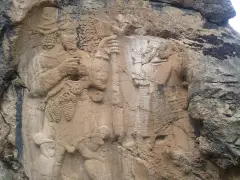
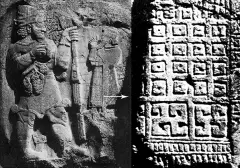
The primary rock relief, known as İvriz 1, dates from the second half of the 8th century BC. It depicts King Warpalawas of Tuwana standing on a stone platform with raised hands, facing the storm-god Tarhunzas. The god is depicted as much larger than the king, holding ripe wheat stalks and grape clusters to symbolize fertility. The location of the relief suggests that the spring water, rather than rare rains, was the source of this fertility, indicating a possible local spring cult.
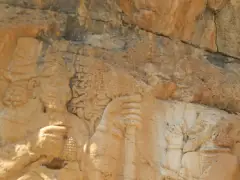
Three Luwian hieroglyphic inscriptions accompany the main relief. One identifies the image as Warpalawas' great Tarhunza, another describes it as the king's self-portrait, and a third, heavily weathered by submersion, credits the carving to Tiyammaradu, Warpalawas' favorite servant. In 1986, during construction work upstream, a stele fragment (İvriz 2) was found containing bilingual inscriptions in Luwian hieroglyphs and Phoenician. This inscription, erected by Warpalawas, reveals that the spring was named Salusa during his time.
Historical records show that the monument was described by Kâtip Çelebi in the 17th century. Although Jean Otter described it in 1748, he likely relied on earlier texts. Major von Fischer became the first European to actually visit the site in 1837. These findings support the idea that the location was a wealthy sanctuary of Tarhunzas patronised by Warpalawas.
What to See
Visitors to the site can observe the primary rock relief, İvriz 1, which measures 4.2 m high by 2.4 m wide. This is considered the best-produced of many Hittite rock reliefs. The carving shows King Warpalawas greeting the god Tarhunzas, who holds symbols of fertility and wears a weapon with a bird-shaped pommel. Three Luwian hieroglyphic inscriptions are visible on the relief, though some are weathered due to water exposure.
Additional features include:
- The site of the 1986 discovery of the bilingual stele (İvriz 2) and a statue head fragment.
- A secondary, unfinished relief copy located south of the main cliff in the hills along the Ambar Deresi river, near the ruins of a Byzantine abbey called Kızlar Sarayı.
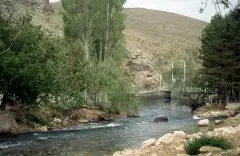
- The natural spring source of the İvriz Suyu, which flows almost all year and is central to the site's historical context.
Visiting Tips
Wear comfortable shoes for walking on uneven terrain near the cliff face and riverbank. Bring sun protection, as the area is exposed. If visiting nearby religious sites like the Byzantine abbey ruins, dress modestly.
Combine your visit with a trip to the Konya Ereğli Museum to see the original inscribed stele and relief fragments. Plan your itinerary to include the nearby Kızlar Sarayı ruins for a broader historical perspective.
Hotels near İvriz monuments
- Cherry Garden City&Spa Hotel 10.2 km
More Museums in Konya
İvriz monuments – Frequently Asked Questions
What is İvriz monuments?
The İvriz monuments are a group of Hittite monuments located in south-central Anatolia, specifically in the town of Aydınkent, formerly known as İvriz.
Where is İvriz monuments located?
İvriz monuments is in Halkapınar, Konya, Turkey.
Do children need a ticket at İvriz monuments?
Children aged 0–6 enter İvriz monuments free of charge. Visitors aged 7 and over need a full ticket.
What other museums can I visit in Konya?
Other museums in Konya include Konya Sahip Ata Foundation Museum, Konya Ethnography Museum and Konya Akşehir Nasreddin Hodja Museum of Archaeology and Ethnography.