Antioch of Pisidia
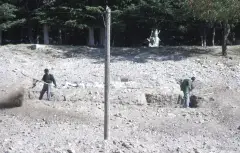
Photos: Dosseman, CC BY-SA 4.0 · Reinhard Saczewski, Public domain · Basak, CC BY-SA 4.0 — via Wikimedia Commons
Explore Antioch of Pisidia, an ancient Seleucid and Roman city near Yalvaç in Isparta, featuring fortified walls and the sanctuary of Men Askaenos.
ℹ️ About Antioch of Pisidia
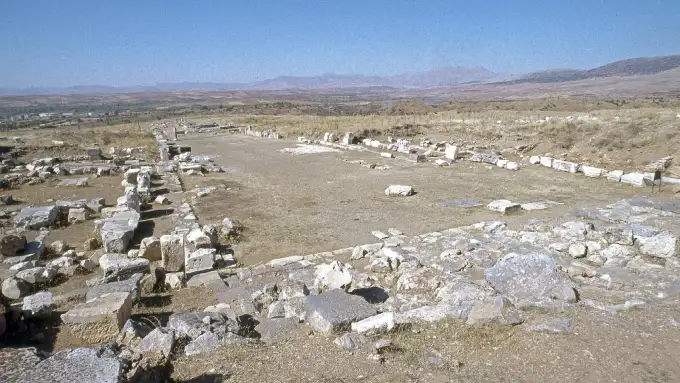
Antioch of Pisidia is an ancient city located in the Turkish Lakes Region, specifically near the modern town of Yalvaç in Isparta Province. Situated at the crossroads of the Mediterranean, Aegean, and Central Anatolian regions, this archaeological site formerly marked the border between Pisidia and Phrygia. The city was built on a hill, with its highest point reaching 1,236 meters in the north, offering strategic views over the surrounding landscape.
The site lies approximately one kilometer northeast of Yalvaç. It is surrounded by significant geographical features, including the deep ravine of the Anthius River to the east, which flows into Lake Eğirdir. The area is also bordered by the Sultan Mountains to the northeast, Mount Karakuş to the north, and Kızıldağ to the southeast, creating a distinct natural setting for this historical settlement.
History
Tradition dates the city to the 3rd century BCE, founded by the Seleucid Dynasty. After Alexander the Great's death, Seleucus I Nicator took control of Pisidia and founded fortified cities at strategic locations. Colonists from Magnesia on the Maeander were brought to populate Pisidian Antioch. Antiochus I Soter likely established it as a military base to control Galatian attacks, defeating them in 270 BC with the help of elephants. Archaeological finds at the Sanctuary of Men Askaenos suggest earlier classical cultures existed in the area.
Rome expanded eastward, defeating the Galatians and acquiring Pisidia from Antiochos III via the Treaty of Apamea in 188 BC. The land was given to the Kingdom of Pergamon. When Attalos III bequeathed his kingdom to Rome in 133 BC, and the usurper Aristonikos was defeated in 129 BC, Rome annexed Western Anatolia. The region's fertile soil, fed by water from the Sultan Mountains, supported agriculture, which helped integrate Roman veterans into the local economy.
What to See
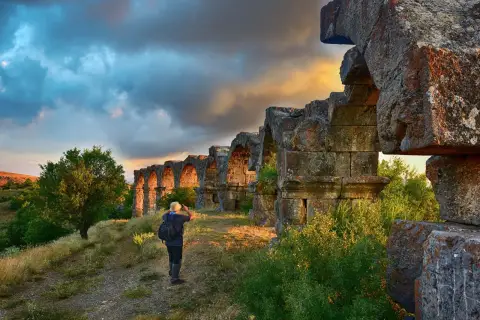
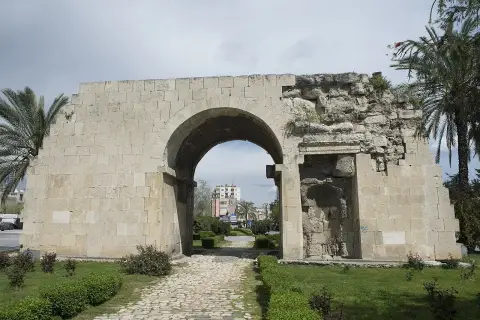
Visitors can explore the extensive ruins of this ancient city, which features an acropolis covering 460,000 square meters. The site is enclosed by fortified defense walls, highlighting its strategic military importance. Key areas include the sanctuary of Men Askaenos, located on a hill to the southeast, which offers views of the ancient territory.
- The acropolis and its surrounding fortified defense walls.
- The sanctuary of Men Askaenos on the southeastern hill.
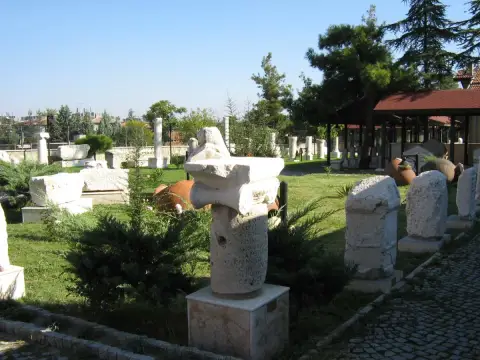
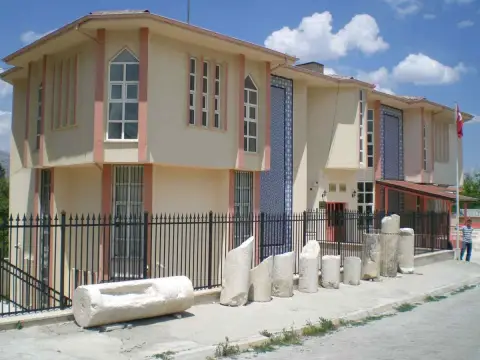
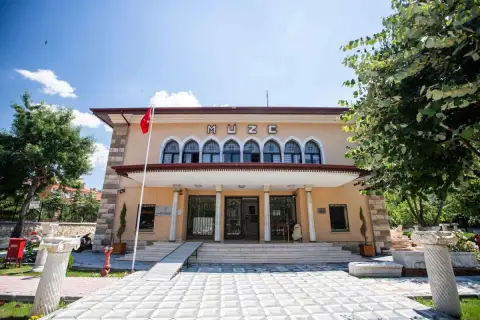
- Artifacts from the region, including idols and figurines, are exhibited in the Yalvaç Museum.
Visiting Tips
Wear comfortable shoes for walking on uneven terrain and bring sun protection, as the site is exposed. The area is open-air, so hydration is recommended. Combine your visit with the Yalvaç Museum to see artifacts from the surrounding mounds and the Sanctuary of Men Askaenos.
Tours that visit Antioch of Pisidia
Explore Antioch of Pisidia on one of our guided tours — daily excursions, private tours and group tours that include this site.
Hotels near Antioch of Pisidia
- Hotel Yalvaç 1.4 km
- Yalvac Konaklari 1.5 km
- Hotel Psidia 1.5 km
- Oba Otel 1.5 km
More Museums in Isparta

Antioch of Pisidia – Frequently Asked Questions
What is Antioch of Pisidia?
Antioch of Pisidia is an ancient city located in the Turkish Lakes Region, specifically near the modern town of Yalvaç in Isparta Province.
Where is Antioch of Pisidia located?
Antioch of Pisidia is in Yalvaç, Isparta, Turkey.
Do children need a ticket at Antioch of Pisidia?
Children aged 0–6 enter Antioch of Pisidia free of charge. Visitors aged 7 and over need a full ticket.
Can I visit Antioch of Pisidia on a guided tour?
Yes. Inca Tour visits Antioch of Pisidia on guided tours such as 13 Days Journey of St. Paul: Istanbul, Ephesus, Cappadocia & Biblical Sites Private Tour and 15 Days St. Paul's Missionary Journey: Ankara, Cappadocia, Antioch, Ephesus & Istanbul Private Tour.
What other museums can I visit in Isparta?
Other museums in Isparta include Isparta Museum, Isparta Uluborlu Museum and Isparta Yalvaç Museum.