Column of Justinian
Photos: Semavi EYİCE, CC BY-SA 4.0 · Apollonio di Giovanni / Marco del Buono, CC0 · Unknown (Nuremberg Chronicle, about 1500), Public domain — via Wikimedia Commons
Discover the history of the Column of Justinian, a Byzantine triumphal column in Istanbul's Augustaeum square, demolished by the 1509 earthquake.
ℹ️ About Column of Justinian
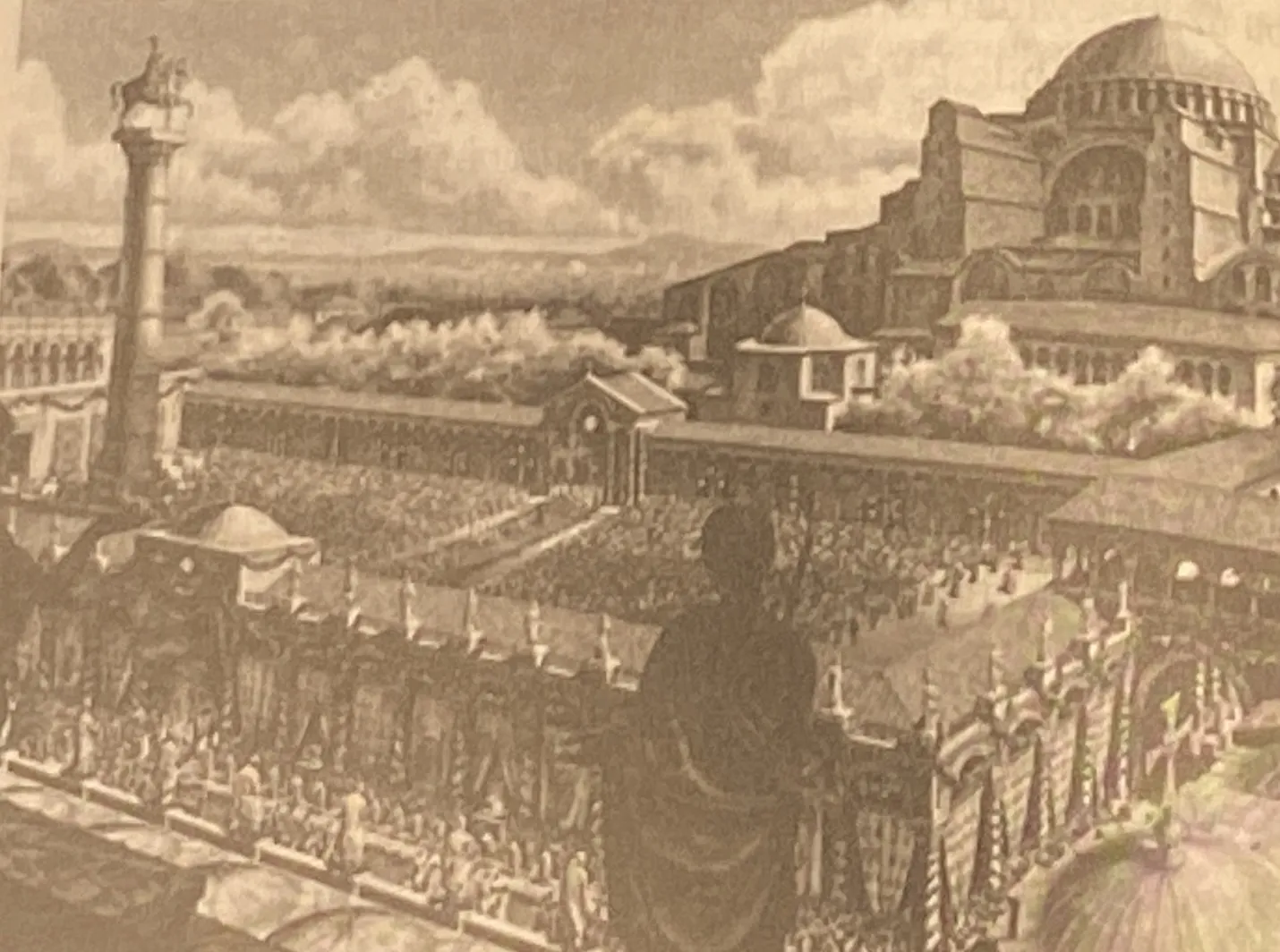
The Column of Justinian was a Roman triumphal column erected in Constantinople by the Byzantine emperor Justinian I in honour of his victories in 543. It stood in the western side of the great square of the Augustaeum, between the Hagia Sophia and the Great Palace. This monumental structure served as a significant landmark in the city's central public space.
The column survived until its demolition by the 1509 Constantinople earthquake, which also affected other historical places. Today, the site marks a location of great historical importance, situated near major Byzantine and Ottoman landmarks in Istanbul, Türkiye.
Geschichte
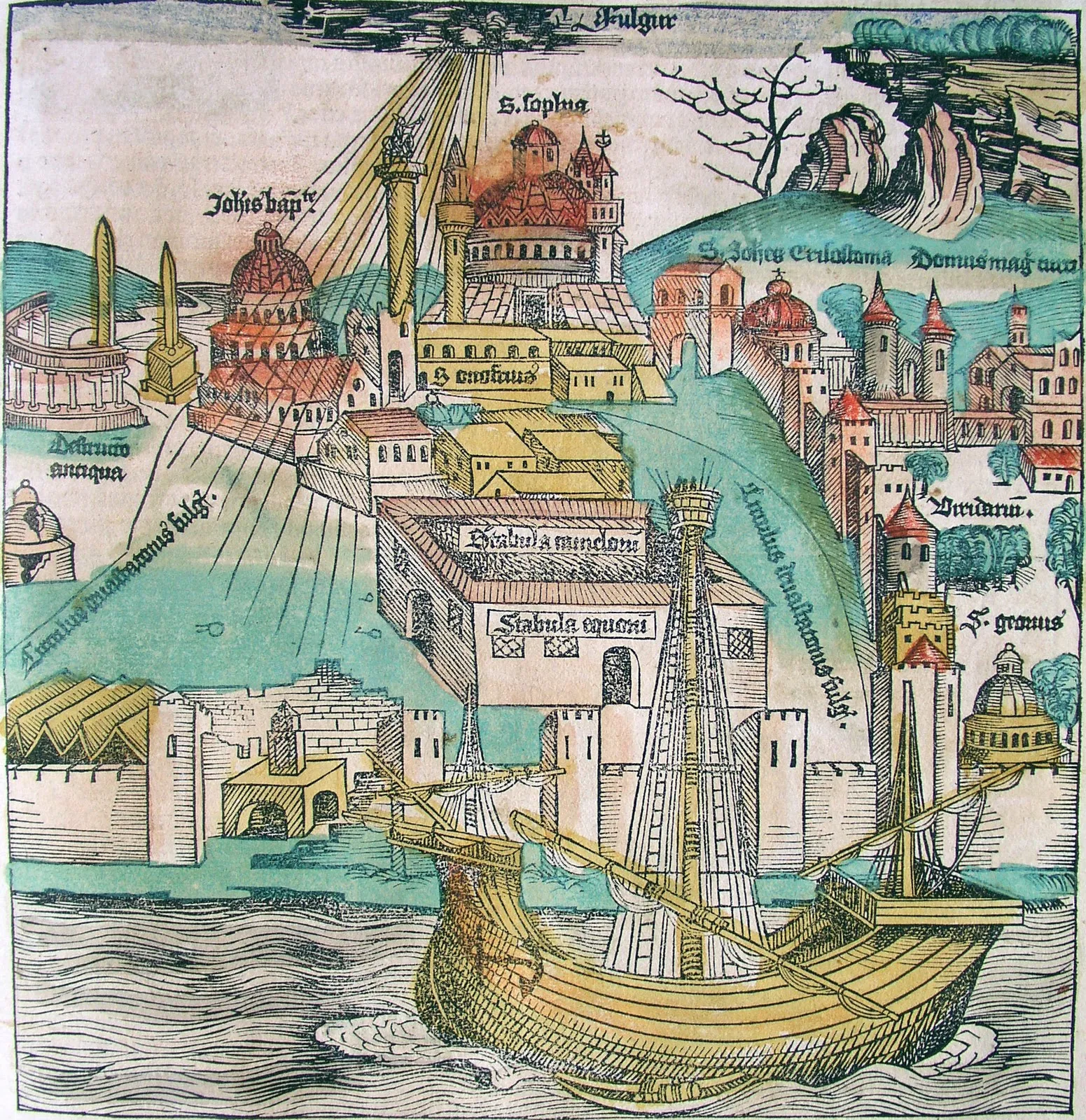
The column was made of brick and covered with brass plaques. It stood on a marble pedestal of seven steps and was topped by a colossal bronze equestrian statue of the emperor in triumphal attire, described by Procopius as the "dress of Achilles." The statue wore an antique-style muscle cuirass and a helmet with a plume of peacock feathers, known as the toupha. It held a globus cruciger in its left hand and stretched its right hand to the East. Evidence from inscriptions suggests the statue may have been a reused earlier work of Theodosius I or Theodosius II.
The column survived intact until late Byzantine times, described by Nicephorus Gregoras and Russian pilgrims. By the 15th century, its prominent position led people to believe the statue represented Constantine the Great, while others associated it with Heraclius. The large globus cruciger, popularly called the "apple," was thought to represent the city's genius loci. Its fall from the statue's hand between 1422 and 1427 was seen as a sign of impending doom.
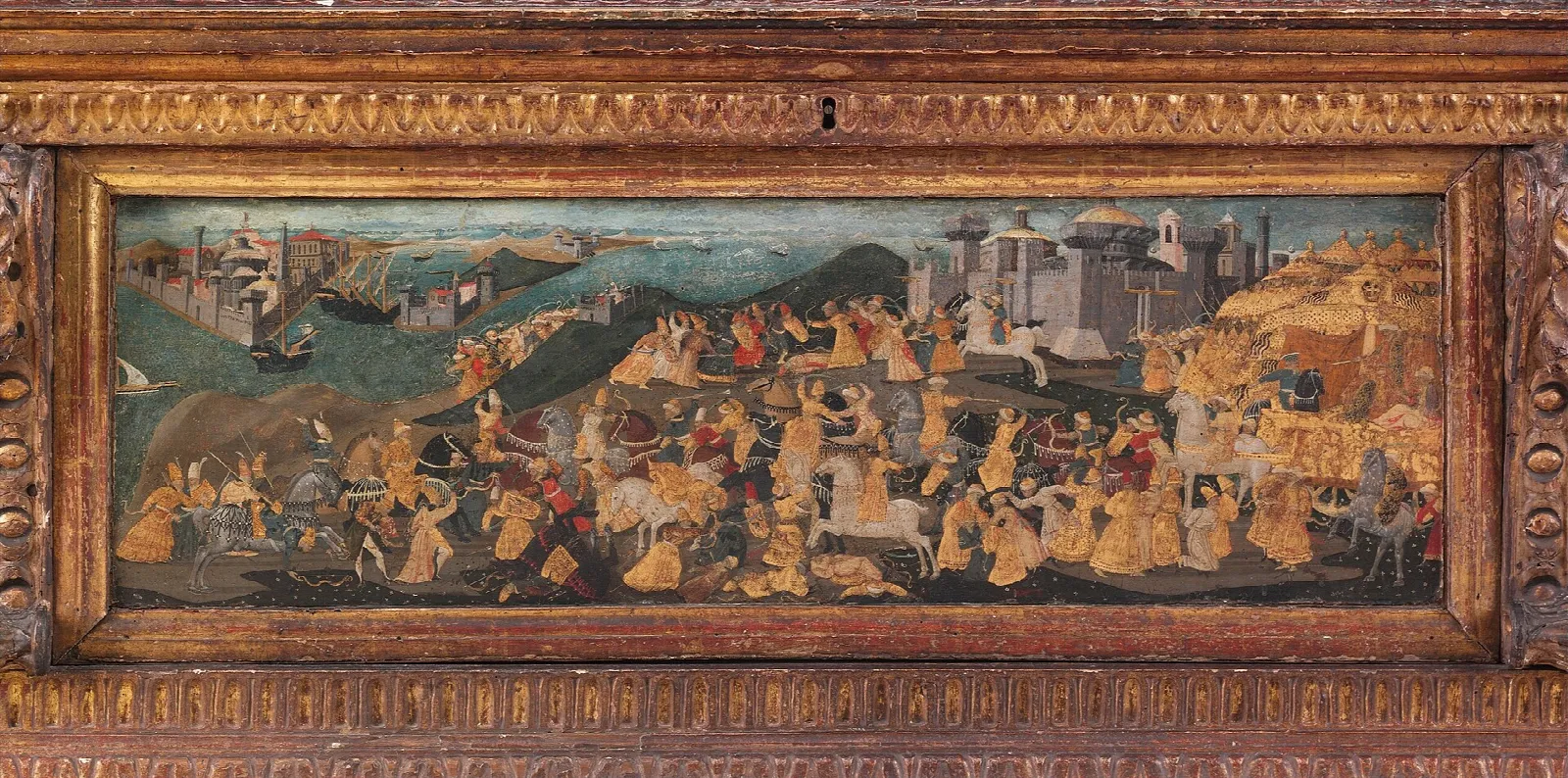
Pierre Gilles, a French scholar in the 1540s, recorded that the statue's fragments lay in Topkapi Palace before being melted to make cannons. He noted the leg exceeded his height and the nose was over nine inches long. The statue's appearance is preserved in a 1430s drawing by Giovanni Dario.
Was gibt es zu sehen?
Visitors to the site can explore the historical context of the Augustaeum square. While the column itself was demolished in 1509, the location remains a focal point for understanding Byzantine urban planning.
- The western side of the great square of the Augustaeum.
- The area between the Hagia Sophia and the Great Palace.
- Historical accounts of the colossal bronze equestrian statue.
- References to the marble pedestal of seven steps.
The site invites reflection on the monumental scale of Byzantine imperial propaganda, as described by historical figures like Nicephorus Gregoras and Pierre Gilles.
Besuchertipps
Wear comfortable shoes for walking on uneven historic pavement. Combine your visit with nearby sights named in the source, such as the Hagia Sophia and the Great Palace area.
Bring sun protection if visiting during hot weather, as the square is open-air. Respect the historical significance of the area by staying on designated paths.
Hotels near Column of Justinian
- Sura Hagia Sophia Hotel ★★★★★ 0,2 km
- Eresin Hotel Sultanahmet ★★★★★ 0,6 km
- Demiray Hotel ★★★★★ 0,8 km
- Legacy Ottoman Hotel ★★★★★ 1,0 km
- The Peninsula Istanbul ★★★★★ 1,7 km
- Crowne Plaza Istanbul ★★★★★ 1,8 km
Weitere Museen in Istanbul
Column of Justinian – Frequently Asked Questions
What is Column of Justinian?
The Column of Justinian was a Roman triumphal column erected in Constantinople by the Byzantine emperor Justinian I in honour of his victories in 543.
Where is Column of Justinian located?
Column of Justinian is in Fatih, Istanbul, Turkey.
Do children need a ticket at Column of Justinian?
Children aged 0–6 enter Column of Justinian free of charge. Visitors aged 7 and over need a full ticket.
Welche anderen Museen kann ich in Istanbul besuchen?
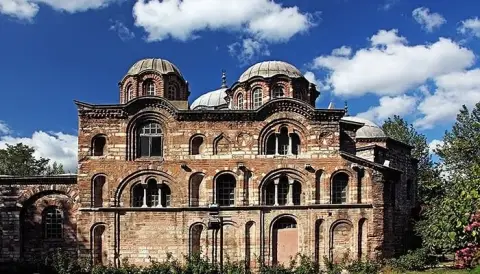
Weitere Museen in Istanbul sind das Asiyan-Museum, das Luftfahrtmuseum und das Fethiye Muzesi (Pammakaristos-Kirche).